Organic fertilizer is becoming increasingly important as farmers and agricultural producers look for ways to improve soil fertility, recycle organic waste, and reduce dependence on synthetic fertilizers. Organic fertilizer can be produced from a wide range of materials, including livestock manure, poultry manure, crop residues, compost, food-processing waste, and other biodegradable organic materials.
However, producing high-quality organic fertilizer is more than simply collecting manure and drying it. Commercial production requires a controlled process that reduces moisture, stabilizes organic matter, removes impurities, adjusts nutrient content, and converts the processed material into a convenient fertilizer product.
A well-designed organic fertilizer production line can integrate composting, crushing, mixing, granulation, drying, cooling, screening, coating, and packaging into one continuous production system. By selecting the right equipment and controlling each stage, manufacturers can produce organic fertilizer with consistent particle size, stable moisture, good nutrient distribution, and convenient storage and application characteristics.
This article explains how to produce organic fertilizer step by step, from raw material preparation to final packaging.
1. What Is Organic Fertilizer?
Organic fertilizer is a fertilizer product made primarily from plant, animal, or other organic materials. Unlike many synthetic fertilizers, organic fertilizers are generally based on naturally derived materials and can contribute organic matter to agricultural soils.
Common raw materials include:
- Cow manure
- Chicken manure
- Pig manure
- Sheep manure
- Horse manure
- Poultry litter
- Crop straw
- Rice husks
- Vegetable residues
- Food-processing waste
- Compost
- Peat and other organic materials
The final fertilizer may be produced as loose compost, powder, granules, or pellets.
Granulated organic fertilizer is particularly suitable for commercial production because it is easier to transport, store, measure, and apply.
2. Why Produce Organic Fertilizer?
Organic fertilizer production provides several benefits.
Waste Recycling
Livestock manure and agricultural residues can be converted into useful fertilizer products instead of being discarded.
Soil Improvement
Organic fertilizer can add organic matter and contribute to soil structure.
Commercial Value
Processed organic waste can become a marketable agricultural product.
Easier Transportation
Granulated fertilizer is generally easier to package and transport than wet manure.
More Convenient Application
Uniform particles make mechanical or manual fertilizer application easier.
For farms with large amounts of livestock manure, establishing an organic fertilizer plant can create an additional revenue stream while improving waste management.
3. Step 1: Select Suitable Raw Materials
The first step is selecting and evaluating raw materials.
Different materials have different nutrient contents, moisture levels, and processing characteristics.
For example:
Chicken manure is relatively rich in nutrients but may have high moisture and a strong odor.
Cow manure contains organic matter and fiber and can be processed into fertilizer after composting.
Pig manure can provide valuable nutrients but generally requires appropriate moisture and odor management.
Crop residues can add carbon and organic matter but may require crushing and decomposition.
A manufacturer may use one raw material or combine several materials to achieve the desired fertilizer characteristics.
4. Step 2: Test the Raw Materials
Before designing a commercial production process, raw materials should be tested.
Important parameters include:
- Moisture content
- Organic matter
- Nitrogen
- Phosphorus
- Potassium
- Particle size
- Ash content
- Impurities
- pH
These parameters determine how the material should be processed.
For example, material with very high moisture may require intensive drying after composting, while dry agricultural residues may require additional moisture before fermentation.
Testing also helps determine the appropriate fertilizer formulation.
5. Step 3: Remove Foreign Materials
Raw materials may contain stones, plastic, metal, and other unwanted materials.
These impurities should be removed before further processing.
Cleaning equipment can include:
- Trommel screens
- Magnetic separators
- Vibrating screens
- Manual sorting systems
Removing foreign materials protects crushers, mixers, granulators, and conveyors.
It also improves the quality of the finished fertilizer.
6. Step 4: Adjust the Raw Material Mixture
A good organic fertilizer formula may contain several different organic materials.
For example, a mixture could contain:
- Livestock manure
- Crop residues
- Compost
- Agricultural by-products
The purpose of mixing is to create a material with suitable:
- Carbon-to-nitrogen ratio
- Moisture
- Nutrient content
- Structure
- Fermentation characteristics
The exact formulation should be determined according to the raw materials and target fertilizer product.
7. Step 5: Control the Carbon-to-Nitrogen Ratio
The carbon-to-nitrogen ratio is important during composting.
Materials such as straw and sawdust are generally carbon-rich, while manure and some food-processing residues contain more nitrogen.
If the mixture contains too much carbon, decomposition may be slow.
If it contains excessive nitrogen, odor and ammonia emissions may increase.
Therefore, combining carbon-rich and nitrogen-rich materials can help create a more suitable composting environment.
8. Step 6: Compost or Ferment the Organic Materials
Fresh manure should generally be stabilized before being converted into commercial fertilizer.
Composting is a biological process in which microorganisms decompose organic matter under controlled conditions.
During composting:
- Organic matter is decomposed
- Temperature increases
- Moisture changes
- The material becomes more stable
- Some undesirable microorganisms can be reduced
A well-managed fermentation process is fundamental to producing stable organic fertilizer.
9. Step 7: Use a Compost Turner
For large-scale production, manually turning compost is inefficient.
A compost turning machine can mix and aerate the material.
Common equipment includes:
- Windrow turner
- Self-propelled compost turner
- Track-type compost turner
- Fermentation tank or in-vessel system
Turning improves oxygen distribution and helps maintain more uniform fermentation conditions.
The choice depends on production capacity, available space, and factory design.
10. Step 8: Control Moisture During Composting
Moisture strongly affects microbial activity.
If the compost is too dry, microbial activity may decrease.
If it is too wet, airflow can be restricted and anaerobic conditions may develop.
Therefore, moisture should be monitored throughout fermentation.
Water can be added when necessary, while dry agricultural materials can help absorb excess moisture.
The appropriate moisture range depends on the specific materials and composting method.
11. Step 9: Monitor Temperature
Temperature is another important indicator of composting progress.
The temperature of a properly active compost pile can rise as microorganisms break down organic matter.
Monitoring temperature helps operators determine when the material needs turning or when fermentation is progressing toward completion.
The goal is not simply to achieve the highest possible temperature but to maintain suitable conditions for effective and controlled decomposition.
12. Step 10: Allow the Compost to Mature
After active fermentation, the compost needs sufficient time to stabilize.
Mature compost generally has:
- More stable organic matter
- Lower odor
- More uniform texture
- Reduced biological activity
Using immature material can cause problems during later processing.
Therefore, compost maturity should be evaluated before moving the material into the granulation section.
13. Step 11: Crush the Fermented Material
After composting, the material may contain hard lumps.
A crusher breaks these lumps into smaller particles.
Common equipment includes:
- Vertical crusher
- Chain crusher
- Hammer crusher
- Cage crusher
Crushing improves material uniformity and makes subsequent mixing and granulation easier.
A properly sized crushing system can also reduce the risk of blockage in downstream equipment.
14. Step 12: Screen the Compost
Screening can remove oversized particles and unwanted materials.
A screening machine separates the compost into different particle sizes.
The oversize fraction can sometimes be returned to the crusher for further processing.
This creates a recycling loop and improves raw material utilization.
15. Step 13: Add Nutrient Ingredients if Required
Not every organic fertilizer needs additional ingredients, but commercial formulas may include supplementary nutrients.
Depending on the product, manufacturers may add:
- Nitrogen-rich organic materials
- Phosphate sources
- Potassium sources
- Mineral additives
- Trace elements
- Beneficial microbial products
The formula should be developed according to the desired nutrient profile and applicable fertilizer regulations.
16. Step 14: Mix the Fertilizer Ingredients
A mixer ensures that the organic material and additional ingredients are evenly distributed.
Uniform mixing is particularly important for commercial fertilizer because each granule should have relatively consistent composition.
A suitable mixer can improve:
- Nutrient uniformity
- Granule quality
- Product consistency
Mixing time and sequence should be optimized according to the formulation.
17. Step 15: Adjust Moisture Before Granulation
Before granulation, moisture must be suitable for the selected granulation technology.
If the material is too dry, granules may have poor strength.
If it is too wet, the material may become sticky and difficult to process.
Moisture can be adjusted through:
- Water spraying
- Liquid organic materials
- Dry additives
- Controlled drying
Automatic moisture adjustment can improve production stability.
18. Step 16: Choose the Right Granulation Method
Organic fertilizer can be produced using different granulation technologies.
Common options include:
Disc Granulator
A rotating disc forms fertilizer particles through controlled rolling and agglomeration.
Rotary Drum Granulator
A rotating drum continuously produces fertilizer granules and is suitable for larger-scale production.
Roller Compaction Granulator
Dry material is compressed between rollers to form fertilizer particles.
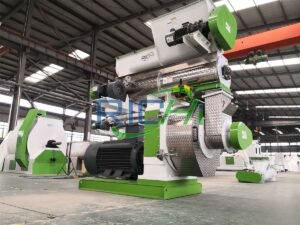
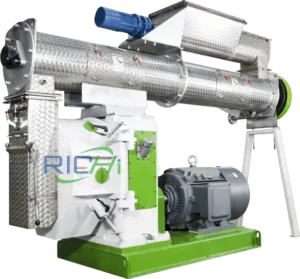
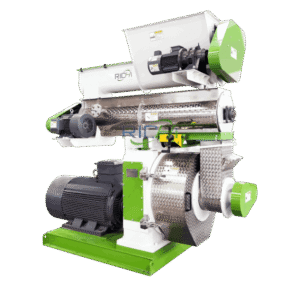
Organic Fertilizer Pellet Mill
Pellet mills can compress suitable organic materials into cylindrical pellets.
The choice depends on raw materials, product specifications, capacity, moisture, and desired granule shape.
https://pelletisingmachine.com/organic-fertilizer-pellet-making-machine
19. Step 17: Produce Uniform Granules
Granule size is important for commercial fertilizer.
A consistent particle size provides:
- Better appearance
- More uniform application
- Easier packaging
- Better transportation characteristics
The granulation machine should therefore be selected according to the target particle diameter.
Different markets may require different granule sizes.
20. Step 18: Dry the Granules
Freshly granulated fertilizer usually contains more moisture than the desired final product.
A rotary dryer can reduce moisture and improve storage stability.
The drying process should be controlled carefully because excessive heat may affect some fertilizer components.
Important parameters include:
- Inlet temperature
- Outlet temperature
- Airflow
- Residence time
- Material feed rate
The exact drying conditions depend on the fertilizer formulation.
21. Step 19: Cool the Fertilizer Granules
After drying, fertilizer granules should be cooled.
Cooling helps:
- Stabilize granules
- Reduce product temperature
- Prepare fertilizer for screening
- Prevent condensation during packaging
A rotary cooler or counterflow cooler may be used depending on the production system.
22. Step 20: Screen the Finished Fertilizer
After cooling, the granules pass through a screening machine.
The screen separates:
- Fine particles
- Qualified granules
- Oversized particles
The qualified fraction proceeds to packaging.
Fine and oversized material can often be recycled into the granulation process.
This improves production yield and reduces waste.
23. Step 21: Coat the Fertilizer if Necessary
Some commercial organic fertilizers may require coating.
A coating system can apply:
- Anti-caking agents
- Nutrient coatings
- Organic liquids
- Color coatings
- Other functional materials
Coating can improve product appearance and storage characteristics.
However, the coating formulation should be compatible with the fertilizer and intended application.
24. Step 22: Package the Finished Product
The final fertilizer is weighed and packed into bags.
Automatic packaging equipment can improve:
- Weighing accuracy
- Packaging efficiency
- Labor productivity
- Product consistency
Common package sizes vary according to the target market.
Small bags may be suitable for retail customers, while large bags or bulk packaging may be used for farms and distributors.
25. Step 23: Store the Finished Fertilizer Properly
Finished fertilizer should be stored in a dry and clean warehouse.
Storage conditions should protect the product from:
- Rain
- Groundwater
- Excessive humidity
- Direct contamination
Good packaging and warehouse management help maintain granule strength and reduce caking.
26. Complete Organic Fertilizer Production Process
A typical commercial production flow can be summarized as:
Raw Material Receiving
↓
Cleaning
↓
Mixing/Formula Adjustment
↓
Composting and Fermentation
↓
Crushing
↓
Screening
↓
Ingredient Batching
↓
Mixing
↓
Moisture Adjustment
↓
Granulation
↓
Drying
↓
Cooling
↓
Screening
↓
Coating
↓
Packaging
This process can be modified according to the raw materials and final product.
27. Main Equipment in an Organic Fertilizer Production Line
A commercial organic fertilizer machine system may contain the following equipment:
Fermentation Equipment
- Compost turner
- Fermentation tank
- Windrow system
Crushing Equipment
- Vertical crusher
- Chain crusher
- Hammer crusher
Mixing Equipment
- Horizontal mixer
- Vertical mixer
- Double-shaft mixer
Granulation Equipment
- Disc granulator
- Rotary drum granulator
- Roller granulator
- Organic fertilizer pellet machine
Drying and Cooling
- Rotary dryer
- Cooler
- Hot-air furnace
Screening
- Rotary screen
- Vibrating screen
Coating and Packaging
- Coating machine
- Automatic weighing machine
- Bagging machine
- Sealing machine
Environmental Equipment
- Cyclone
- Dust collector
- Exhaust fan
The final equipment configuration should be customized according to production requirements.
28. Why a Complete Organic Fertilizer Production Line Is Better Than Individual Machines
Buying individual machines without an overall process design can create production problems.
For example, a high-capacity granulator is not useful if the dryer cannot handle the same output.
Similarly, a large crusher may create more material than the mixer can process.
A complete organic fertilizer production line balances the capacity of all major sections.
This can help reduce:
- Production bottlenecks
- Material accumulation
- Equipment idle time
- Energy waste
- Manual handling
The result is a more stable and efficient production process.
29. How to Control Organic Fertilizer Quality
Quality control should be performed throughout the production process.
Raw Material Quality
Check moisture, nutrient content, impurities, and organic matter.
Compost Quality
Monitor temperature, moisture, odor, and maturity.
Granule Quality
Check:
- Particle size
- Strength
- Moisture
- Appearance
Finished Product
Depending on regulations and product specifications, manufacturers may test:
- Nitrogen
- Phosphorus
- Potassium
- Organic matter
- Moisture
- pH
- Other required parameters
Consistent quality control helps build customer trust.
30. How to Reduce Organic Fertilizer Production Costs
Production costs can be controlled through several strategies.
Use Local Raw Materials
Transport costs can be reduced by using nearby manure and agricultural residues.
Optimize the Formula
Avoid unnecessary additives.
Improve Fermentation
Efficient composting reduces processing time.
Control Moisture
Excessive water increases drying costs.
Improve Equipment Efficiency
Efficient motors and properly sized machines can reduce electricity consumption.
Recycle Fines
Returning suitable fines to granulation can improve material utilization.
31. How to Improve Production Efficiency
Automation is an effective way to improve productivity.
A modern production line can automate:
- Raw material feeding
- Batching
- Mixing
- Moisture adjustment
- Granulation
- Drying
- Screening
- Packaging
A PLC control system can monitor equipment operation and production parameters.
This reduces manual intervention and helps operators identify problems quickly.
32. Dust Control During Organic Fertilizer Production
Dust can be generated during:
- Crushing
- Grinding
- Screening
- Conveying
- Packaging
A dust collection system can include:
- Cyclones
- Bag filters
- Local extraction
- Exhaust fans
Enclosed conveyors and properly sealed equipment can further reduce dust escaping into the workshop.
Good housekeeping is also essential.
33. Odor Management
Fresh manure can generate unpleasant odors.
Effective composting is one of the most important methods of reducing odor.
Additional measures may include:
- Proper aeration
- Controlled moisture
- Appropriate carbon materials
- Enclosed fermentation
- Ventilation
- Odor-treatment systems
Odor control should be considered when designing a commercial plant, particularly when the factory is located close to residential or commercial areas.
34. Safety Considerations
Organic fertilizer factories contain rotating equipment, conveyors, dryers, electrical systems, and other machinery.
Important safety measures include:
- Machine guards
- Emergency stop systems
- Electrical protection
- Proper ventilation
- Operator training
- Regular maintenance
- Safe access platforms
Hot-air drying systems require additional attention to temperature control and fire prevention.
35. Small-Scale Organic Fertilizer Production
A small producer may begin with a relatively simple process:
Composting → Crushing → Mixing → Granulation → Screening → Packaging
If the raw material is already dry enough, a separate dryer may not be necessary.
Small-scale systems can be suitable for:
- Farms
- Cooperatives
- Local fertilizer businesses
- Small agricultural enterprises
As demand grows, additional drying, screening, packaging, and automation equipment can be added.
36. Large-Scale Organic Fertilizer Production
A large commercial factory can use a highly automated system.
The process may include:
Raw Material Receiving → Automatic Feeding → Fermentation → Crushing → Batching → Mixing → Granulation → Drying → Cooling → Screening → Coating → Automatic Packaging
Multiple production machines can be installed in parallel to increase capacity.
A centralized control system can monitor the entire factory.
37. How to Build an Organic Fertilizer Factory
Investors should consider several factors before starting a project.
Raw Material Availability
Is sufficient manure or organic waste available year-round?
Market Demand
Who will purchase the fertilizer?
Product Type
Will the factory produce powder, pellets, or granules?
Production Capacity
What is the target output per hour or year?
Factory Location
Is the site convenient for raw material transportation and finished-product distribution?
Utilities
Is electricity, water, and fuel readily available?
Environmental Requirements
What local regulations apply to odor, dust, wastewater, and emissions?
These factors should be evaluated before purchasing equipment.
38. Customized Organic Fertilizer Production Line Design
There is no universal organic fertilizer production line.
For example, a poultry manure fertilizer plant may require a different process from a plant processing cow manure and straw.
A customized design should consider:
- Raw material type
- Initial moisture
- Production capacity
- Fertilizer formula
- Granule diameter
- Drying requirements
- Packaging format
- Factory dimensions
- Automation requirements
This approach ensures that equipment is matched to the actual production conditions.
39. RICHI Organic Fertilizer Production Solutions
RICHI Machinery can provide customized organic fertilizer production solutions for different organic raw materials, including livestock manure, poultry manure, agricultural residues, and other biodegradable materials.
Depending on the project, the system can include:
- Compost turner
- Crusher
- Dryer
- Mixer
- Granulator
- Cooler
- Screening machine
- Coating machine
- Packaging machine
- Dust collection system
- Automatic control system
The project can be developed around the customer’s raw materials, desired capacity, fertilizer formula, factory layout, and target market.
RICHI can also provide turnkey engineering services covering production-line design, equipment manufacturing, transportation, installation and commissioning, operator training, spare-parts support, and long-term technical assistance.
40. Advantages of a Turnkey Approach
A turnkey engineering approach can provide several benefits.
Integrated Design
All equipment is designed to work together.
Easier Project Management
The customer can communicate with one primary engineering partner.
Faster Installation
Equipment and process layouts are prepared as an integrated project.
Better Equipment Matching
The capacity of each machine can be balanced.
Technical Support
Operators can receive training on the complete production system.
Easier Expansion
The initial factory can be designed with future capacity increases in mind.
41. Common Mistakes When Producing Organic Fertilizer
Skipping Fermentation
Fresh manure may not be suitable for direct commercial fertilizer production.
Ignoring Moisture
Incorrect moisture can affect fermentation, granulation, and drying.
Using an Unbalanced Formula
Nutrient composition may fail to meet product requirements.
Choosing Equipment Only by Price
Cheap equipment may create higher operating costs or quality problems.
Ignoring Dust and Odor
Environmental problems can affect workers and nearby communities.
Poor Factory Layout
Unnecessary material movement increases labor and energy costs.
A complete engineering plan can help avoid these problems.
42. Future Development of Organic Fertilizer Production
The organic fertilizer industry is increasingly moving toward:
- Higher automation
- Better nutrient control
- Improved granule quality
- Lower energy consumption
- Better environmental protection
- Waste recycling
- Customized fertilizer formulas
Manufacturers may also develop specialized products for:
- Vegetables
- Fruits
- Grains
- Flowers
- Organic farms
- Soil improvement
A flexible production system can make it easier to introduce new fertilizer products.
Conclusion
Producing organic fertilizer step by step involves a series of carefully controlled processes, from raw material preparation and composting to crushing, mixing, granulation, drying, cooling, screening, coating, and packaging.
A typical commercial process is:
Raw Material Preparation → Composting → Crushing → Screening → Batching → Mixing → Moisture Adjustment → Granulation → Drying → Cooling → Screening → Coating → Packaging
The exact process depends on the raw materials and desired fertilizer product.
For manufacturers, a complete organic fertilizer production line can provide an integrated solution that connects every stage of production. By properly balancing composting equipment, crushers, mixers, granulators, dryers, coolers, screens, coating machines, packaging systems, and environmental equipment, manufacturers can achieve stable production and consistent fertilizer quality.
The most important factors for successful organic fertilizer production include stable raw materials, effective fermentation, accurate formulation, appropriate moisture, efficient granulation, controlled drying, reliable screening, effective dust and odor management, and proper packaging.
For commercial projects, RICHI can customize the production process and equipment configuration according to the customer’s raw materials, production capacity, product specifications, factory layout, and automation requirements. A turnkey engineering approach can cover the complete project from production-line design and equipment manufacturing to installation, commissioning, training, and long-term technical support.
With the right technology and process design, livestock manure and agricultural waste can be transformed from disposal problems into valuable fertilizer products. A well-designed organic fertilizer factory can therefore combine waste recycling, soil improvement, commercial production, and agricultural sustainability in one efficient production system.