Agriculture has always been the foundation of human civilization, providing food, raw materials, and economic opportunities for billions of people around the world. However, modern agricultural development faces many challenges, including soil degradation, excessive chemical fertilizer use, environmental pollution, and the increasing demand for food production. To address these challenges, sustainable agriculture has become a major global goal.
Fertilizer production plays an important role in supporting sustainable agricultural development. By supplying essential nutrients to crops and improving soil fertility, fertilizers help farmers increase productivity while maintaining long-term land health. Among different types of fertilizers, organic fertilizers have gained increasing attention because they utilize natural resources, recycle agricultural waste, and reduce dependence on chemical inputs.
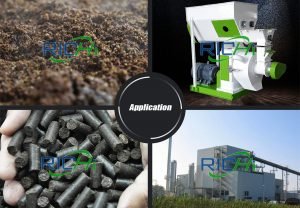
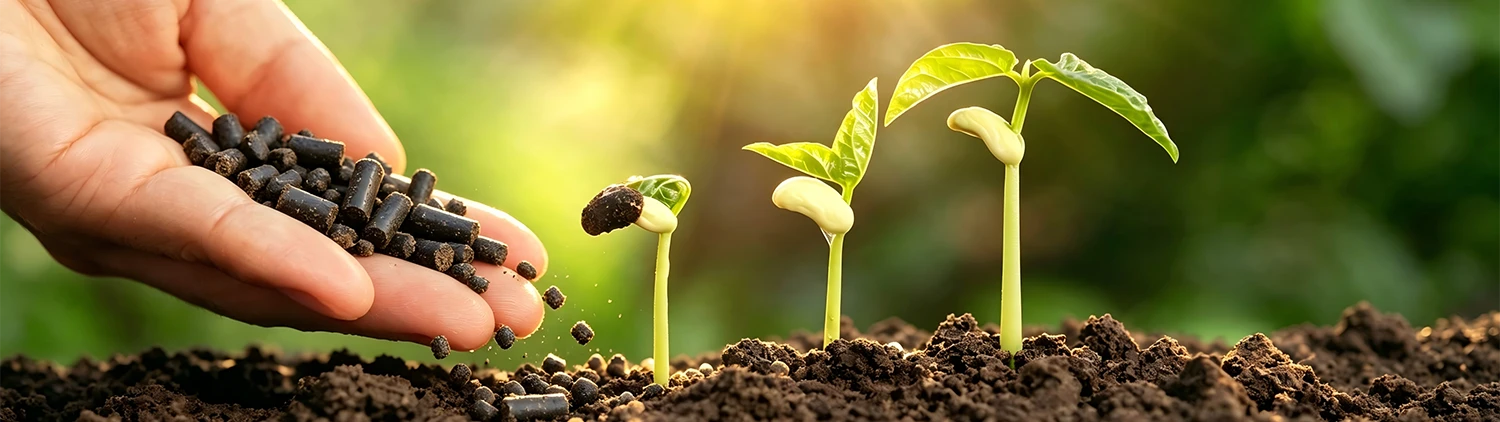
Modern fertilizer production technology allows organic materials such as animal manure, crop residues, compost, and agricultural byproducts to be transformed into valuable fertilizer products. Equipment such as the organic fertilizer pellet machine plays a key role in this process by converting loose organic materials into uniform pellets that are easier to store, transport, and apply.
This article explores how fertilizer production supports sustainable agriculture, including its contribution to soil improvement, resource recycling, environmental protection, agricultural efficiency, and long-term food security.
1. The Importance of Fertilizers in Modern Agriculture
Plants require essential nutrients to grow, develop, and produce high yields. The most important nutrients include nitrogen, phosphorus, and potassium, commonly known as NPK elements. Without sufficient nutrients, crops may experience slow growth, reduced productivity, and poor quality.
Natural soil nutrient levels are often insufficient to support intensive agricultural production. Continuous farming removes nutrients from the soil, and these nutrients must be replenished through fertilizer application.
Fertilizer production provides farmers with reliable nutrient sources that help:
- Improve crop growth
- Increase agricultural productivity
- Enhance food quality
- Support stable harvests
- Maintain farming efficiency
However, sustainable agriculture requires more than simply increasing fertilizer use. The challenge is producing and applying fertilizers in a way that protects soil health and minimizes environmental impacts.
This is where modern organic fertilizer production becomes increasingly important.
2. Organic Fertilizer Production and Sustainable Farming
Organic fertilizer production is based on the principle of recycling natural resources. Instead of relying entirely on synthetic chemicals, organic fertilizers use materials that come from biological sources.
Common raw materials include:
- Animal manure
- Poultry waste
- Cow dung
- Crop straw
- Food processing residues
- Compost materials
- Agricultural byproducts
Through fermentation, composting, processing, and pelletizing, these materials can be converted into high-quality organic fertilizers.
Organic fertilizer production supports sustainable agriculture by:
- Recycling agricultural waste
- Improving soil structure
- Increasing organic matter content
- Reducing pollution risks
- Supporting natural nutrient cycles
Unlike some chemical fertilizers that provide nutrients quickly but may negatively affect soil quality when overused, organic fertilizers contribute to long-term soil improvement.
3. Improving Soil Fertility and Soil Health
Healthy soil is the foundation of sustainable agriculture. Soil provides plants with water, nutrients, and physical support. However, intensive farming practices can reduce soil organic matter and damage soil structure.
Organic fertilizers help restore soil fertility by adding organic materials and beneficial microorganisms.
The benefits include:
Increasing Organic Matter
Organic fertilizers add carbon-rich materials to the soil, improving nutrient availability and biological activity.
Improving Soil Structure
Organic matter helps create better soil conditions by improving aeration, water retention, and root development.
Enhancing Microbial Activity
Beneficial microorganisms in organic fertilizers support natural nutrient cycling and improve plant growth.
Reducing Soil Degradation
Regular application of organic fertilizers helps prevent nutrient depletion and maintains long-term productivity.
Through sustainable fertilizer production, farmers can maintain healthier soils while achieving stable crop yields.
4. Recycling Agricultural Waste into Valuable Resources
One of the greatest contributions of fertilizer production to sustainability is waste recycling.
Agricultural activities generate large amounts of organic waste every year. Examples include:
- Livestock manure
- Crop straw
- Vegetable waste
- Fruit processing residues
- Poultry litter
If these wastes are improperly managed, they may cause:
- Odor problems
- Water pollution
- Greenhouse gas emissions
- Public health concerns
Organic fertilizer production provides an effective solution by converting waste materials into useful agricultural inputs.
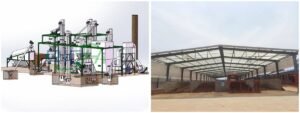
The production process typically includes:
- Raw material collection
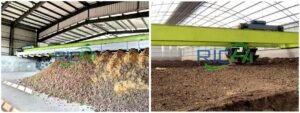
- Composting or fermentation
- Crushing
- Mixing
- Granulation
- Drying
- Cooling
- Packaging
During the pelletizing stage, the organic fertilizer pellet machine compresses processed organic materials into uniform fertilizer pellets.
This transformation creates economic value while reducing environmental problems associated with agricultural waste disposal.
https://richipelletizer.com/organic-fertilizer-pellet-machine
5. Reducing Dependence on Chemical Fertilizers
Chemical fertilizers have played an important role in increasing global food production. However, excessive use can create environmental challenges.
Potential problems include:
- Soil acidification
- Nutrient runoff
- Water pollution
- Reduced soil biodiversity
- Greenhouse gas emissions
Organic fertilizer production helps reduce dependence on chemical fertilizers by providing alternative nutrient sources.
Organic fertilizers release nutrients more gradually, allowing plants to absorb nutrients more efficiently. This reduces nutrient loss and supports more balanced crop growth.
Many modern farming systems combine organic and chemical fertilizers to achieve both productivity and sustainability.
6. The Role of Fertilizer Pelletizing Technology
Traditional organic fertilizers are often bulky, have unpleasant odors, and are difficult to transport and apply. Pelletizing technology solves many of these problems.
The organic fertilizer pellet machine is an essential piece of equipment in modern fertilizer production plants. It processes powdered or semi-finished organic materials into compact pellets with consistent size and shape.
Pelletizing provides several advantages:
Easier Transportation
Pellet fertilizers have higher density than loose organic materials, reducing transportation costs.
Better Storage Stability
Pellets are less affected by moisture and easier to store for long periods.
Improved Application Efficiency
Uniform pellet size allows more accurate fertilizer spreading.
Enhanced Product Value
Pellet fertilizers have better appearance and commercial value compared with traditional loose fertilizers.
These advantages make pelletized organic fertilizer more attractive to both farmers and fertilizer suppliers.
7. Supporting Efficient Nutrient Management
Sustainable agriculture requires efficient nutrient management. Farmers need to provide crops with sufficient nutrients while avoiding unnecessary fertilizer losses.
Organic fertilizer production supports precision nutrient management by creating standardized fertilizer products.
Pellet fertilizers can be designed according to different crop requirements by adjusting:
- Raw material formulas
- Nutrient ratios
- Pellet size
- Production methods
For example:
- Fruit crops may require different nutrient combinations than cereals.
- Vegetable production may need fertilizers with higher organic matter.
- Pasture systems may require slow-release nutrient sources.
Modern fertilizer production allows manufacturers to develop specialized products for different agricultural applications.
8. Protecting the Environment
Sustainable fertilizer production contributes to environmental protection in several ways.
Reducing Waste Pollution
Converting manure and agricultural residues into fertilizers prevents uncontrolled waste accumulation.
Lowering Greenhouse Gas Emissions
Proper waste processing reduces methane emissions from unmanaged organic waste.
Protecting Water Resources
Balanced fertilizer use reduces nutrient runoff into rivers and groundwater.
Supporting Circular Agriculture
Organic fertilizer production creates a closed-loop system where agricultural waste returns to farmland as nutrients.
This approach reduces resource consumption and supports environmentally responsible farming practices.
9. Increasing Agricultural Productivity
Sustainable agriculture does not mean reducing productivity. Instead, it focuses on achieving high yields while protecting natural resources.
Organic fertilizers contribute to productivity by improving:
- Soil nutrient availability
- Root development
- Water retention
- Crop resistance
- Long-term soil performance
Healthy soils are more capable of supporting productive agriculture over many years.
By integrating organic fertilizer production with modern farming methods, farmers can achieve better results while reducing environmental pressure.
10. Economic Benefits of Organic Fertilizer Production
Fertilizer production also creates economic opportunities for farmers, entrepreneurs, and agricultural companies.
A well-designed organic fertilizer plant can generate income by:
- Processing local agricultural waste
- Producing commercial fertilizer products
- Supplying nearby farms
- Creating employment opportunities
- Reducing waste management costs
For livestock farms, fertilizer production provides an additional revenue stream by converting manure into valuable products.
For fertilizer manufacturers, investing in advanced equipment such as an organic fertilizer pellet machine can improve production efficiency and expand market opportunities.
11. Supporting Rural Development
Organic fertilizer production is closely connected with rural economic development.
Many agricultural areas have abundant organic resources but limited waste management solutions. Establishing fertilizer production facilities can create local industries based on available materials.
Benefits include:
- New employment opportunities
- Better waste management
- Increased farmer income
- Development of local supply chains
By combining agriculture and fertilizer production, rural communities can build more sustainable economic systems.
12. Improving Fertilizer Application Efficiency
The form of fertilizer affects how efficiently nutrients are delivered to crops.
Loose organic materials may have inconsistent nutrient distribution and require more labor during application. Pellet fertilizers solve these issues by providing:
- Uniform nutrient distribution
- Convenient mechanical spreading
- Reduced application labor
- Better fertilizer utilization
Farmers can apply pellet fertilizers more accurately, reducing waste and improving crop nutrient absorption.
This efficiency supports both economic savings and environmental protection.
13. Future Trends in Sustainable Fertilizer Production
The future of fertilizer production will continue moving toward sustainability, efficiency, and technological innovation.
Important trends include:
Advanced Production Automation
Automatic control systems will improve production stability and reduce labor requirements.
Customized Fertilizer Products
Manufacturers will develop fertilizers designed for specific crops and soil conditions.
Improved Waste Utilization
More agricultural and industrial organic wastes will be converted into fertilizers.
Integration with Circular Agriculture
Fertilizer production will become an important part of sustainable agricultural systems.
Advanced equipment, including efficient pelletizing systems, will continue improving the quality and competitiveness of organic fertilizers.
14. Choosing Suitable Fertilizer Production Equipment
For businesses planning to establish fertilizer production facilities, equipment selection is a critical factor.
A reliable production system should include:
- Raw material processing equipment
- Composting equipment
- Crushing machines
- Mixing systems
- Granulation equipment
- Drying systems
- Cooling equipment
- Screening machines
- Packaging systems
The selection of an appropriate organic fertilizer pellet machine depends on:
- Production capacity
- Raw material characteristics
- Fertilizer type
- Investment budget
- Market requirements
Professional equipment manufacturers can provide customized production solutions to ensure efficient operation and stable fertilizer quality.
Conclusion
Fertilizer production plays a vital role in supporting sustainable agriculture by improving soil fertility, recycling agricultural waste, reducing environmental pollution, and enhancing crop productivity. Organic fertilizer production, in particular, provides a practical solution for creating a more balanced and environmentally friendly agricultural system.
By transforming animal manure, crop residues, and other organic materials into valuable fertilizer products, farmers can reduce waste while improving soil health. Modern pelletizing technology further enhances the value of organic fertilizers by producing uniform, easy-to-use pellets.
The organic fertilizer pellet machine serves as a key component in this process, helping manufacturers create high-quality fertilizer products that meet the needs of modern agriculture. As global agriculture continues to focus on sustainability and resource efficiency, fertilizer production will remain an essential factor in building a greener and more productive farming future.