Agriculture has a recurring challenge that is easy to understand but difficult to solve: production is seasonal, while animal feeding is continuous.
Alfalfa may be harvested during a relatively limited period, but dairy cattle, horses, sheep, goats, and other livestock need feed throughout the year.
This creates a storage problem.
Farmers need to preserve forage quality while making the material easy to handle and economical to transport.
Pelletizing is one possible solution.
By processing dried and properly prepared alfalfa into compact pellets, agricultural businesses can create a standardized product that is easier to store and distribute.
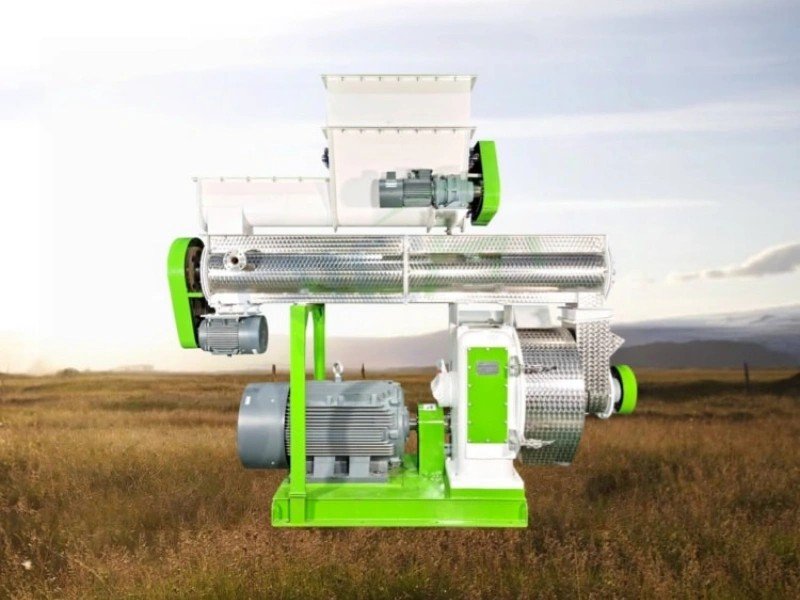
For projects centered around this concept, an alfalfa pellet mill can serve as the core of a processing system designed around seasonal forage management.
Seasonality Changes the Economics of Feed
Forage production often follows weather and crop cycles.
During harvesting periods, large quantities of alfalfa may become available within a relatively short time.
Outside the harvesting season, supply may become more limited.
This creates a classic agricultural imbalance:
High supply during harvest + continuous demand throughout the year.
Storage bridges this gap.
But storage is not free.
Buildings, handling equipment, labor, transportation, and moisture protection all contribute to the total cost.
Pelletizing can potentially improve storage efficiency by increasing the density and uniformity of the material.
The First Decision: Preserve or Process?
Not all forage needs to be pelletized.
Baled hay remains an excellent storage format for many farms.
Pellet production becomes more attractive when there are additional reasons to process the forage.
For example:
- The farm has limited storage space
- Hay needs to be transported to distant markets
- A commercial feed product is planned
- Automated feeding is desired
- Fine forage residues are available
- Standardized feed portions are needed
The decision should therefore be based on the business model.
What Makes Alfalfa Pelletizing Different from Ordinary Wood Pelletizing?
Although both processes involve biomass compression, the materials behave differently.
Alfalfa is an agricultural forage.
Its fiber structure, ash characteristics, moisture behavior, and nutritional requirements differ from woody biomass.
The purpose is also different.
Fuel pellets are designed primarily around combustion performance.
Feed pellets must satisfy requirements related to animal nutrition, ingredient quality, cleanliness, and physical durability.
Therefore, feed pellet production should be designed around feed-processing principles rather than simply copying a wood pellet process.
Preparing the Forage
The condition of the raw material determines how much preparation is required.
Dry hay may need chopping and grinding.
Material with excessive moisture may require drying.
Very long fibers may need additional size reduction.
The goal is to create a feedstock that can enter the pellet mill consistently.
Particle size should not be unnecessarily fine.
Excessive grinding can consume additional energy and may increase operating costs.
A balanced preparation system is more practical.
Choosing the Correct Hay Capacity
Forage pellet projects often have seasonal peaks.
A farm may produce large quantities of hay during harvest but operate the pellet line for only part of the year.
This creates an interesting capacity question.
Should the plant be designed for peak harvest volume or average annual requirements?
There is no universal answer.
A 2-3 T/H hay pellet mill for sale could be attractive for a medium-scale operation that wants to process significant forage volumes while maintaining manageable equipment utilization.
However, the investor should calculate annual operating hours rather than looking only at hourly capacity.
A machine producing 3 tons per hour for 500 hours annually has a very different business model from one producing the same amount every day.
What Happens to the Pellets After Production?
The production process does not end when pellets leave the die.
Fresh pellets should normally be cooled before long-term storage.
Screening can remove fines and broken pieces.
Then the pellets can be packed or moved into bulk storage.
This creates several potential product formats:
- Small bags
- Large bags
- Bulk storage
- Direct farm delivery
- Commercial feed distribution
The target market should determine the final packaging strategy.
Why Standardized Feed Can Improve Inventory Management
One of the hidden advantages of pelletizing is standardization.
Loose forage can vary significantly in volume.
Pellets can be measured more precisely by weight.
This can simplify inventory calculations.
For example, a farm manager can track how many kilograms or tons of pelletized feed remain rather than estimating the remaining volume of loose forage.
This becomes increasingly valuable as farm size increases.
The Commercial Opportunity
Pelletized alfalfa is not only relevant to farms.
A commercial feed producer can purchase or source alfalfa, process it, and sell standardized forage pellets to other livestock businesses.
Potential customer groups include:
- Dairy farms
- Horse owners
- Sheep farms
- Goat farms
- Rabbit producers
- Feed distributors
- Agricultural cooperatives
Different customers may require different pellet specifications.
Therefore, a commercial producer should avoid treating all forage buyers as one market.
A Feed Manufacturer Needs More Than a Pellet Mill
Commercial production may require a broader process.
If alfalfa is being used as one ingredient in complete animal feed, the factory may need:
Raw material receiving → Grinding → Batching → Mixing → Pelletizing → Cooling → Screening → Packing
The equipment can become significantly more sophisticated than a simple forage pellet machine.
Businesses researching complete systems may evaluate an industrial animal feed equipment for sale package rather than purchasing isolated machines.
(Related Post:https://www.richipelletmill.com/animal-feed-mill-equipment-for-sale/)
This can make the process easier to coordinate.
How Can Multiple Forage Types Be Handled?
Some businesses may want to process alfalfa alongside other suitable forage materials.
Possible materials include:
- Timothy hay
- Grass hay
- Clover
- Straw
- Other dried forage
However, different materials have different physical properties.
Mixing them may require adjustments to grinding, moisture management, and pelletizing conditions.
A flexible plant should therefore be designed with raw material testing in mind.
Energy Consumption and Operating Costs
Pelletizing requires electricity.
Grinding is also energy-intensive.
If drying is necessary, the thermal energy requirement can become significant.
Therefore, energy efficiency should be part of project planning.
The economic calculation should include:
- Electricity
- Fuel for drying
- Labor
- Maintenance
- Spare parts
- Packaging
- Transportation
A pellet project should be profitable after these expenses—not simply before them.
Why Storage Conditions Still Matter
Pellets are easier to store than loose forage, but they are not immune to moisture.
A warehouse should protect the product from rain, condensation, and excessive humidity.
Proper ventilation is also useful.
Feed storage areas should be kept clean and protected from contamination.
Long-term quality depends on the entire chain.
Even an excellent pellet can lose value if it is stored improperly.
Could Pelletizing Help Small Agricultural Cooperatives?
Potentially.
A cooperative can combine forage from several farms and establish a shared processing facility.
This can improve equipment utilization.
Instead of every farm purchasing individual machinery, the cooperative operates a central plant.
The model can work particularly well when:
- Farms are geographically close
- Forage production is sufficient
- There is shared market demand
- Transportation distances are manageable
A cooperative can also create a standardized local feed product.
The Importance of Market Research
Before producing pellets commercially, the business should identify its buyers.
Questions include:
- Which animal species are being targeted?
- What pellet diameter is preferred?
- What packaging format is expected?
- How much feed is purchased each month?
- What competing products are available?
- What delivery distance is acceptable?
These questions can prevent the common mistake of producing a technically good product without a clear market.
How Technology Supports a More Organized Feed Chain
Pelletizing is part of a broader trend toward mechanization in agriculture.
Modern farms increasingly use automated systems for feeding, storage, weighing, and material handling.
Standardized pellets fit naturally into these systems.
Feed can be transferred by conveyor or auger, stored in bins, and delivered in controlled quantities.
This can reduce repetitive manual handling.
The greatest value may therefore come from integrating pellet production with the rest of the farm’s feed-management system.
Planning a Scalable Operation
A small facility can be designed so that it grows over time.
The initial plant might focus only on alfalfa.
Later, the business may add:
- More storage
- Additional grinding capacity
- Automatic packing
- Larger cooling systems
- Additional pellet mills
- Complete feed production
Planning expansion early can prevent major layout problems later.
What Should Investors Check Before Buying?
A practical checklist includes:
Raw Material
How much alfalfa is actually available?
Moisture
Does the material require drying?
Particle Size
How much grinding is necessary?
Capacity
How many tons per hour are genuinely required?
Market
Who will purchase the finished product?
Product
What pellet diameter and packaging are needed?
Costs
What are electricity, labor, maintenance, and transportation expenses?
Expansion
Can the pellet plant grow later?
These questions are more useful than simply comparing machine prices.
A Different Way to Look at Forage
Alfalfa is usually considered a crop.
After harvesting, it becomes hay.
After processing, however, it can become a standardized commercial feed ingredient or product.
This transformation creates new possibilities.
A farmer can improve handling.
A cooperative can centralize processing.
A feed manufacturer can develop a regional product.
A distributor can transport feed more efficiently.
In each case, the pellet is not the end of the story. It is a new format for an existing agricultural resource.
Those researching forage processing technology can from this source explore additional industry information, while actual equipment decisions should be based on raw material testing and project-specific calculations.
Final Thoughts
The biggest opportunity in alfalfa pellet production may not be nutritional innovation.
It may be logistics.
Pelletizing can change how forage is stored, measured, transported, and distributed.
For farms and agricultural businesses dealing with seasonal supply, this physical transformation can be commercially meaningful.
The successful projects will be those that understand the complete chain—from field conditions to final customer.
Rather than asking only, “Which pellet mill should we buy?”, investors should ask:
How much forage do we have?
What problem are we trying to solve?
Who will use the pellets?
What capacity can we realistically operate?
When those questions are answered first, equipment selection becomes much more straightforward.