As poultry farming continues to expand worldwide, feed has become the single largest operating expense for commercial producers. Improving feed quality while lowering production costs has become the primary objective for investors, integrated poultry companies, agricultural cooperatives, and independent feed manufacturers.
Today’s successful producers understand that building a feed factory is no longer about simply purchasing machines. It requires thoughtful engineering, optimized production workflows, intelligent automation, and equipment that can adapt to changing market demands.
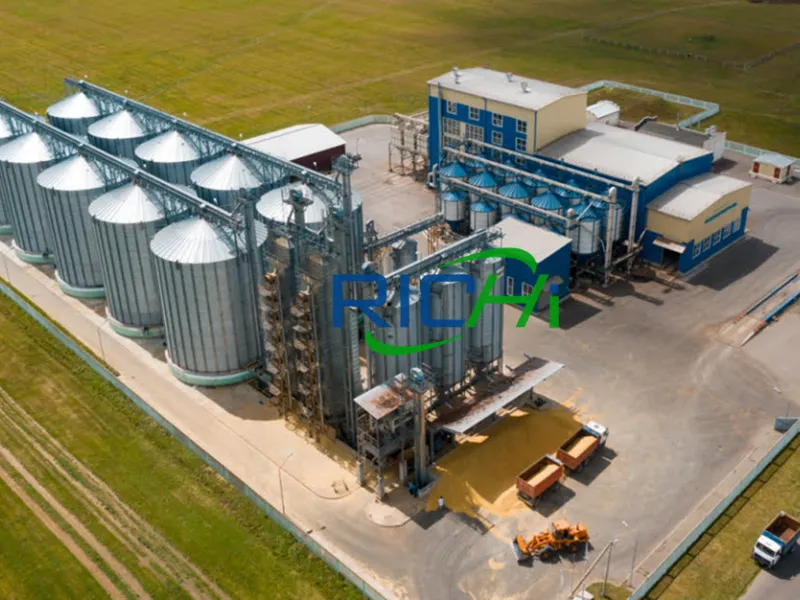
Whether supplying feed for broilers, layers, breeders, or free-range poultry, a modern chicken feed manufacturing plant serves as the foundation of an efficient and profitable poultry business. This article explores the strategies behind designing a competitive feed factory, selecting the right equipment, and preparing for long-term industry growth.
Why Feed Manufacturing Is Becoming a Strategic Investment
Feed typically represents 60–75% of poultry production costs. Even a small improvement in feed conversion ratio (FCR) can generate substantial savings across thousands of birds.
Rather than relying on third-party suppliers, many poultry producers are investing in their own feed manufacturing facilities to gain greater control over:
- Feed quality
- Ingredient sourcing
- Production scheduling
- Nutrition consistency
- Operating costs
- Product traceability
- Supply chain stability
A professionally designed chicken feed manufacturing plant enables businesses to respond quickly to market changes while maintaining consistent feed performance.
Modern Feed Plants Are Built Around Flexibility
Unlike older factories designed for only one product, today’s feed mills are expected to manufacture multiple feed formulas every day.
A single production line may produce:
- Broiler starter feed
- Broiler grower feed
- Broiler finisher feed
- Layer mash
- Layer pellets
- Breeder feed
- Duck feed
- Turkey feed
- Quail feed
Efficient recipe switching has become just as important as production capacity.
Flexible engineering minimizes cleaning time while maximizing production efficiency.
Understanding the Complete Production Workflow
High-quality poultry feed results from an integrated manufacturing process where every stage contributes to the final product.
1. Raw Material Receiving
Corn, wheat, soybean meal, bran, fish meal, limestone, vitamins, minerals, oils, and additives are carefully inspected before entering storage.
Proper storage reduces contamination while maintaining ingredient quality.
2. Cleaning and Pre-Treatment
Magnetic separators remove metal impurities.
Screens eliminate oversized particles.
Clean raw materials improve equipment reliability and reduce maintenance costs.
3. Grinding
Hammer mills reduce ingredient size into uniform particles.
Proper grinding improves:
- Mixing accuracy
- Pellet durability
- Nutrient digestibility
- Feed conversion efficiency
Particle size should always match the nutritional requirements of different poultry growth stages.
4. Precision Batching
Computer-controlled weighing systems accurately measure each ingredient according to nutritional formulas.
Automation minimizes formulation errors while ensuring consistent production.
5. High-Efficiency Mixing
Modern ribbon or paddle mixers distribute macro and micro ingredients evenly throughout the batch.
Uniform mixing prevents nutrient segregation and ensures every pellet delivers balanced nutrition.
6. Steam Conditioning
Steam conditioners raise both moisture and temperature before pelleting.
Proper conditioning offers several advantages:
- Improved starch gelatinization
- Better pellet strength
- Higher digestibility
- Reduced bacterial contamination
- Lower pellet mill power consumption
Conditioning is often one of the most overlooked steps in feed manufacturing despite its major impact on pellet quality.
7. Pelleting
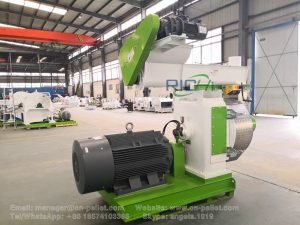
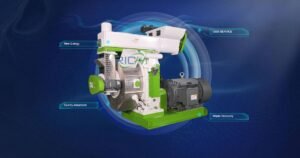
The heart of every pellet production line is the pellet mill.
Conditioned mash passes through precision-engineered dies where rollers compress raw materials into dense, uniform pellets.
Pellet size varies depending on poultry age:
- Starter feed
- Grower feed
- Finisher feed
- Breeder feed
Consistent pellet dimensions improve feed intake while reducing waste during transportation and feeding.
8. Cooling
Fresh pellets leave the pellet mill at elevated temperatures.
Counterflow coolers gradually reduce moisture and temperature to improve storage stability.
Proper cooling also prevents pellet cracking and mold development.
9. Screening
Finished pellets pass through vibrating screens.
Broken pellets and fines return to production while qualified pellets continue toward packaging.
This recycling process improves overall production efficiency.
10. Packaging
Automatic weighing and bagging systems package feed into multiple bag sizes according to customer requirements.
Integrated palletizing systems further reduce labor costs while improving warehouse efficiency.
Feed Quality Depends on Process Control
Many first-time investors focus exclusively on buying larger pellet mills.
However, excellent feed quality results from controlling every manufacturing stage.
Key quality indicators include:
- Pellet durability
- Uniform density
- Moisture consistency
- Accurate formulation
- Nutritional balance
- Low dust content
- Attractive appearance
Each production stage contributes directly to these outcomes.
Ignoring one section often limits the performance of the entire factory.
Automation Is Reshaping Modern Feed Manufacturing
Digital technology has transformed today’s feed industry.
Modern plants use centralized control systems to monitor every production parameter.
Operators can supervise:
- Ingredient inventory
- Formula management
- Equipment status
- Motor load
- Steam pressure
- Batch reports
- Production efficiency
- Maintenance schedules
- Alarm notifications
Automation reduces labor dependency while improving production consistency.
Historical production data also supports continuous process optimization.
Designing for Future Expansion
Many feed factories quickly outgrow their original production capacity.
Experienced engineering companies therefore design plants with expansion in mind.
Future upgrades may include:
- Additional pellet mills
- Larger raw material silos
- Extra mixers
- New packing lines
- Bulk loading systems
- Additional storage warehouses
Planning for expansion during initial construction usually costs far less than modifying an operating factory later.
Energy Efficiency Creates Long-Term Profitability
Energy consumption directly affects manufacturing costs.
Modern feed plants improve efficiency through:
- Variable frequency drives
- High-efficiency motors
- Optimized conveying systems
- Intelligent dust collection
- Efficient steam utilization
- Reduced material handling distance
- Automated process control
Lower energy consumption translates into greater competitiveness over the lifetime of the factory.
Equipment Reliability Matters More Than Maximum Speed
Fast production means little if machines experience frequent downtime.
Reliable equipment offers:
- Stable production
- Lower maintenance costs
- Longer service life
- Reduced spare parts inventory
- Higher annual output
Investors should evaluate equipment durability alongside production capacity.
Long-term reliability often generates greater returns than slightly higher hourly output.
Choosing the Right Manufacturing Partner
Selecting equipment involves much more than comparing technical specifications.
An experienced supplier evaluates numerous project-specific factors, including:
- Available raw materials
- Local climate
- Utility conditions
- Production goals
- Feed formulations
- Factory dimensions
- Labor availability
- Environmental regulations
- Future expansion plans
These variables influence the final engineering solution far more than equipment catalogs alone.
Businesses searching for industrial animal feed equipment for sale should prioritize suppliers capable of delivering complete project solutions rather than individual machines.
A comprehensive approach minimizes installation risks while ensuring every component works together efficiently.
Sustainability Is Becoming a Business Requirement
Environmental responsibility is no longer optional for modern feed manufacturers.
Many new facilities integrate technologies such as:
- Dust filtration systems
- Noise reduction equipment
- Energy-saving motors
- Waste heat recovery
- Intelligent ventilation
- Automated material transport
These improvements reduce operating costs while supporting regulatory compliance and corporate sustainability goals.
Common Mistakes New Investors Should Avoid
Even well-funded projects can encounter avoidable problems during planning.
Some of the most common mistakes include:
- Selecting equipment based only on price
- Ignoring raw material characteristics
- Underestimating storage requirements
- Choosing insufficient automation
- Leaving no room for expansion
- Poor factory layout planning
- Inadequate dust collection
- Overlooking maintenance accessibility
Careful engineering prevents costly modifications after production begins.
The Importance of Customized Engineering
Every poultry feed project is different.
A factory serving a regional cooperative has different needs from an integrated poultry company supplying millions of birds each year.
Customized engineering considers:
- Local ingredient availability
- Feed formulations
- Climate conditions
- Production schedules
- Investment budget
- Market demand
Tailored solutions typically achieve better efficiency than standardized factory designs.
Investing Beyond Equipment
Successful feed manufacturing is built upon a combination of engineering expertise, intelligent planning, reliable machinery, and ongoing technical support.
Rather than viewing machinery as a one-time purchase, leading investors treat feed plants as long-term production systems that continue evolving alongside business growth.
If you are planning a new project or upgrading an existing factory, click to find out more Here about complete engineering solutions, customized production layouts, and technologies that improve feed quality while reducing operating costs.
Final Thoughts
The poultry industry continues to demand higher feed quality, greater efficiency, and lower production costs. Meeting these expectations requires much more than installing machines—it requires a carefully engineered production system where every process works together seamlessly.
A modern chicken feed manufacturing plant combines precision batching, advanced grinding, intelligent automation, efficient conditioning, and a reliable pellet production line to deliver consistent, high-quality feed for commercial poultry operations. Meanwhile, businesses evaluating industrial animal feed equipment for sale should look beyond equipment specifications and choose partners capable of providing customized engineering, technical expertise, and long-term project support.
As global poultry production continues to expand, manufacturers that invest in flexible, energy-efficient, and scalable feed factories will be best positioned to improve profitability, strengthen product quality, and remain competitive in an increasingly demanding agricultural marketplace.