Commercial rice husk pellet production — defined here as operations targeting external sale rather than on-site consumption — introduces a layer of complexity that purely captive-use plants can ignore. Commercial operators must satisfy customer quality specifications, achieve unit economics that support competitive pricing, maintain regulatory compliance across environmental and energy standards, and manage the logistics of bulk or bagged product distribution. The equipment decisions made at project inception determine whether all of these requirements can be met simultaneously and sustainably.
This article takes a commercial operator’s perspective, addressing the intersection of machine capability and business performance.
What Commercial Buyers of Husk Pellets Actually Require
Understanding the quality and logistics requirements of your target customers before specifying equipment is the correct sequence of decisions. The three main commercial demand channels each have distinct requirements:
Industrial Boiler Operators
Typically purchase under annual or multi-year supply contracts with quality specifications for calorific value (minimum 3,000 kcal/kg), moisture (maximum 12%), ash content (maximum 10%), and pellet dimensional standards (typically 6 or 8 mm diameter, 10–40 mm length). Delivery is bulk by truck or container, usually 20–40 tonne loads. Pricing is typically negotiated quarterly or indexed to energy commodity benchmarks.
Biomass Power Stations
Apply the most demanding quality standards: international certifications such as ENplus B or equivalent, strict chain-of-custody documentation, and laboratory analysis of every shipment lot. They purchase at highest volumes — 5,000–50,000 tonne annual contracts are common — but require consistent supply capability and certification maintenance that smaller operations find challenging.
Wholesale Distributors
Purchase in mixed container loads of bagged product, reselling to small industrial users or export markets. Bag weights of 15–25 kg are standard; product must have consistent appearance, minimal surface dust, and clear quality labelling. Distributors are typically price-sensitive and change suppliers readily — building supply reliability and consistent quality is more valuable than competing on margin.
Machine Selection for Commercial Production
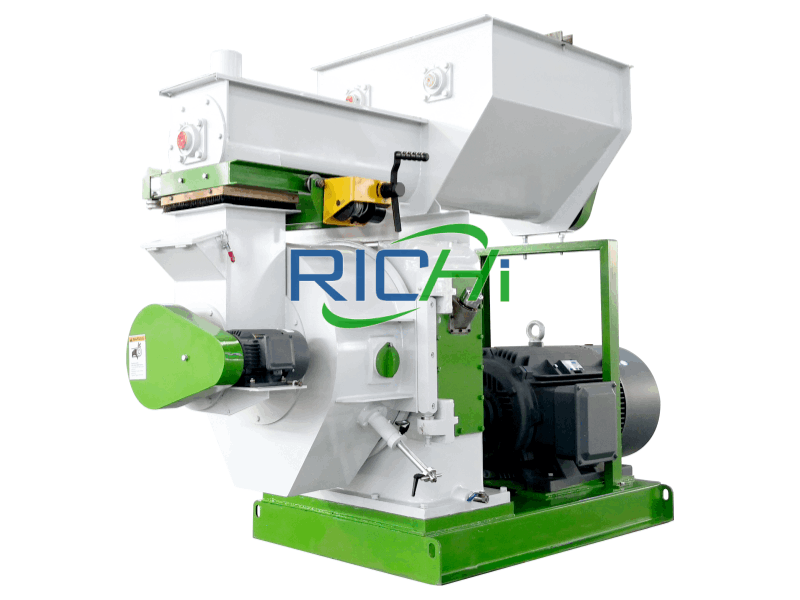
Selecting a husk pelletizer machine for commercial production requires specification of not just the press itself but the complete production system to a commercial quality standard. The critical machine parameters for commercial husk pellet production are:
- Throughput consistency: Commercial contracts have volume commitments. A machine that delivers 80% of rated capacity on good days and 50% on bad days creates inventory management problems and contract compliance risk. Evaluate throughput coefficient of variation across reference customer data, not peak performance claims.
- Pellet dimensional consistency: Commercial specifications cite diameter tolerance (typically ±0.5 mm) and length range. Achieving this consistently requires stable die temperature, consistent feed rate, and sharp cutting knives checked and replaced on schedule.
- Pellet density: Industrial customers use bulk density as a proxy for energy content per unit storage volume. Husk pellets should achieve bulk density above 600 kg/m³ for most commercial applications. Achieving this from husk, which has low natural density, requires adequate compression and sufficient frictional heating in the die.
- Availability: Commercial operations cannot afford frequent unplanned shutdowns. Specify machines with documented MTBF (mean time between failures) data and ensure critical spare parts are held on-site.
Case Study Framework: What a Successful Commercial Operation Looks Like
Drawing on the operational patterns of established commercial husk pellet producers across Vietnam, India, and Nigeria, a typical high-performing operation shares the following characteristics:
- Co-located with or under long-term supply contract with a rice mill producing minimum 50 tonnes/day of husk
- Covered raw material storage for 5–7 days buffer supply
- Two pellet presses in parallel (not one large press) for redundancy and maintenance flexibility
- Quality laboratory with moisture analyser, hardness tester, and calorie meter on-site
- Sales to two or more customer channels to reduce concentration risk
- Working capital reserve equivalent to 60 days of operating cost
For operators seeking a proven equipment platform for this model, a commercial rice husk pellet mill for sale that includes factory acceptance testing, installation support, operator training, and a documented spare parts supply chain covers the equipment risk dimension. The commercial and logistical dimensions — off-take contracts, raw material procurement, quality certification — are the operator’s responsibility and cannot be substituted by machine quality alone.
Regulatory and Certification Landscape
Commercial pellet producers selling into regulated markets face a layered compliance environment:
Environmental Permits
Most jurisdictions require environmental impact authorisation for biomass processing facilities above threshold capacities (typically 1–5 MW thermal input equivalent). Dust emission limits, noise standards, and effluent management requirements apply. Build compliance costs into project budgets — typically $15,000–$60,000 for permit preparation, testing, and ongoing monitoring.
Product Quality Certification
ENplus certification (Europe’s primary pellet quality standard), SGBC certification (Southeast Asia), and equivalent regional schemes provide third-party validation of pellet quality that commercial buyers require. Certification involves annual plant audits, batch testing protocols, and chain-of-custody documentation. Annual certification costs run $3,000–$8,000 depending on scheme and audit scope.
Export Documentation
Pellets sold internationally require phytosanitary certificates, origin documentation, and in some cases country-specific import permits. Establishing relationships with freight forwarders experienced in biomass product export is a meaningful operational capability.
Evaluating Manufacturers for Commercial Projects
For commercial-scale projects, manufacturer evaluation should go beyond equipment specification to assess organisational capability. Richi manufacture, with facilities in Asia and documented projects across 100+ countries in the biomass and feed equipment sector, provides an example of the scale and reference depth that commercial project developers should seek: the ability to supply matched capacity ranges, provide application engineering support, maintain regional service infrastructure, and deliver within contractual lead times.
Key manufacturer evaluation criteria for commercial projects include: demonstrated husk-specific reference projects at target capacity, in-house engineering team (not just resellers), regional parts depot within 500 km, contractual commissioning support with performance guarantees, and financial stability sufficient to honour warranty obligations over the equipment’s service life.
Staying Current with Technology and Market Developments
The rice husk pellet industry evolves as equipment manufacturers improve die materials, as energy markets develop new certification schemes, and as logistics infrastructure improves access to previously underserved markets. Following industry-specific publications and manufacturer technical resources is valuable for operators wanting to stay ahead. For in-depth technical and market analysis on biomass pelleting, the technical content available — blog here on equipment manufacturer knowledge bases, biomass trade publications, and academic biomass engineering journals — provides the ongoing learning platform that converts operational experience into strategic advantage.
Commercial rice husk pellet production is a business that rewards preparation, operational discipline, and relationship quality. The equipment is the enabler — the business fundamentals determine the outcome.
(Related Post: https://biomasspelletizer.com/peanut-shell-pellet-machine/)