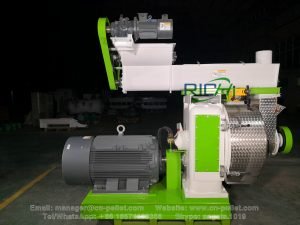
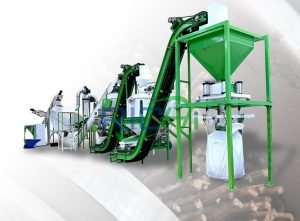
Bamboo is one of the fastest-growing plants on earth, and the industry built around it produces a steady stream of residue. Furniture factories, flooring plants, chopstick workshops, and construction sites generate offcuts, dust, shavings, and rejected culms every day. In many regions, this material is burned in the open, dumped in landfills, or left to rot behind the workshop.
That residue has energy value. It is dry, dense, and consistent compared to whole bamboo culms, which makes it easier to process than fresh harvest. Yet very little of it reaches a pellet mill. The gap is not technical. It is a matter of collection, logistics, and awareness. Workshops do not always know what to do with their waste. Pellet producers do not always know where to find it. And the infrastructure to connect the two is often missing.
A bamboo waste pellet mill sits at the point where that gap can be closed. It turns scattered industrial residue into a uniform fuel product that can be sold, stored, and shipped. But like any biomass project, the machine is only one piece. The economics depend on how the waste is collected, how much it costs to transport, how it is dried, and what market exists for the finished pellets.
This article looks at bamboo waste as a feedstock and at the practical steps required to turn it into fuel. It covers where the waste comes from, how it behaves in a pellet mill, what equipment is needed, and what makes some projects work while others stall.
Where Bamboo Waste Comes From
Bamboo waste is not a single material. It comes from several sources, each with different characteristics.
Processing factories are the largest source. Furniture, flooring, and panel manufacturers cut, shape, and sand bamboo culms. The offcuts, sawdust, and shavings they produce are relatively clean, dry, and consistent. This is the easiest waste to pelletize.
Craft and chopstick workshops generate smaller volumes but similar material. Their waste may be mixed with other materials, which requires sorting.
Construction sites produce bamboo scaffolding and formwork that is discarded after use. This material is often contaminated with concrete, nails, or coatings, which makes it harder to process.
Plantations and forests generate residue during harvesting and thinning. This material is more variable and often wetter than factory waste. It requires more preparation.
The quality of the waste determines the cost of processing. Clean, dry factory waste is the most valuable. Mixed, wet, or contaminated waste is the least.
Why Bamboo Waste Is Easier Than Whole Bamboo
Compared to fresh bamboo culms, industrial bamboo waste is easier to process in several ways.
The first advantage is moisture. Factory waste is usually air-dried and may already be in the 10 to 15 percent moisture range, which is close to ideal for pelleting. Fresh culms can contain 40 to 60 percent moisture and require significant drying.
The second advantage is particle size. Sawdust and shavings are already small. They may need less grinding than whole culms, which reduces energy consumption and hammer wear.
The third advantage is consistency. Factory waste comes from a known process and tends to be uniform. This makes it easier to control pellet quality.
The fourth advantage is cleanliness. Factory waste is usually free of soil, stones, and other contaminants that wear equipment.
These advantages reduce cost and improve pellet quality. They also make bamboo waste an attractive feedstock for small and mid-scale pellet operations that cannot handle fresh culms.
Challenges in Bamboo Waste Collection
Despite its advantages, bamboo waste is not always easy to collect. Several factors complicate the supply chain.
The first is dispersal. Bamboo processing is often done by small workshops rather than large factories. Waste is generated in small amounts at many locations, which makes collection expensive.
The second is seasonality. Some bamboo products are made year-round, but others are seasonal. Waste supply fluctuates accordingly.
The third is competition. Bamboo waste is sometimes used for other purposes, such as particleboard, paper, or compost. Pellet producers may have to compete for the same material.
The fourth is contamination. Waste from construction sites or mixed workshops may contain materials that are not suitable for pelleting. Sorting adds cost.
The fifth is logistics. Transporting low-density waste over long distances is expensive. This favors pellet operations located close to the source.
Projects that succeed usually establish long-term relationships with waste suppliers. They may pay for the waste, provide collection containers, or handle transport themselves. The arrangement depends on local conditions.
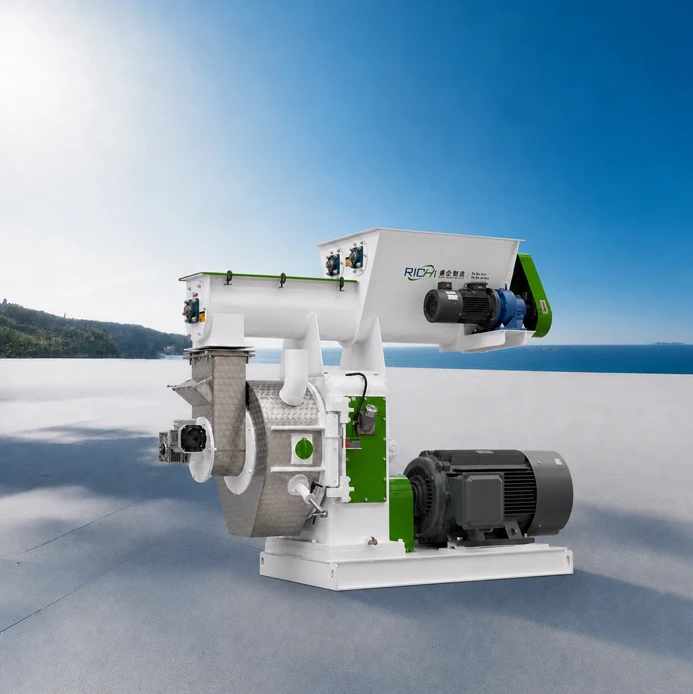
For projects that want to compare equipment options at this stage, a bamboo waste pellet mill for sale with 1 year warranty is available from suppliers who serve the biomass market. Comparing specifications, die options, and support arrangements is part of the decision, and buyers should confirm that the warranty covers wear parts and technical support, not just the main frame.
Processing Bamboo Waste Into Pellets
Turning bamboo waste into pellets involves several steps, though fewer than processing fresh culms.
Collection and transport come first. Waste is gathered from workshops or factories and moved to the processing site.
Sorting follows if needed. Contaminants such as metal, plastic, or treated wood are removed. This step is important because contaminants damage equipment and reduce pellet quality.
Grinding comes next. Depending on the source, the waste may already be small enough, or it may need to be ground to a consistent particle size. A hammer mill is usually used. Because bamboo is abrasive, hammers and screens wear faster than with soft materials.
Drying may be required. Factory waste is often dry enough, but material from other sources may need drying. Rotary dryers are common in larger operations.
Pelleting is the core step. The mill presses the material through a die to form dense pellets. Because bamboo is abrasive, die selection matters. Compression ratio, die material, and surface treatment all affect performance and die life.
Cooling follows. Fresh pellets are hot and moist. They must be cooled before storage or bagging.
Screening and bagging complete the process. Fines are separated and recycled. Finished pellets are bagged or stored in bulk.
Each step has to be sized to match the others. A line with a large mill but insufficient grinding capacity will run below capacity.
Equipment Selection
Equipment for bamboo waste pelleting is similar to equipment for other biomass, with some adjustments for the abrasive nature of the material.
The pellet mill itself should be rated for abrasive biomass. Ring die mills are usually preferred for commercial scale because they handle high volumes and produce more uniform pellets. Die material should be wear-resistant to extend replacement intervals.
Grinding equipment should be sized for the actual particle size of the incoming waste. If the waste is already fine, less grinding capacity is needed. If it includes offcuts and larger pieces, more capacity is needed.
Drying equipment should be sized for the wettest material likely to be received. Even factory waste can be wetter than expected after rain or poor storage.
Cooling equipment should be effective, because bamboo pellets retain heat longer than some other biomass pellets.
Material handling equipment should be designed for the specific form of the waste. Sawdust flows differently from shavings, which flow differently from offcuts.
Drying and Moisture Control
Moisture control is critical in bamboo waste pelleting, even though factory waste is often drier than fresh culms.
The target moisture for pelleting is usually 12 to 15 percent. Material that is too dry will not bind well. Material that is too wet will produce soft pellets and may clog the die.
Factory waste often falls within the target range, but not always. Waste stored outdoors may absorb moisture. Waste from wet processes may be too wet. In these cases, drying is necessary.
Drying cost depends on the starting moisture, the target moisture, and the energy source. In regions with cheap biomass fuel, drying is more affordable. In regions with expensive fuel, it can dominate operating cost.
Storage moisture matters too. Waste that is stored wet will mold, which reduces fuel value and creates health hazards. Covered storage and proper drainage are essential.
Market and Economics
Bamboo waste pellets can be sold into several markets, each with different requirements.
Industrial boilers are one. Bamboo pellets can be co-fired with coal or used in dedicated biomass boilers. Industrial buyers usually purchase large volumes and pay less per ton.
Residential heating is another. Bamboo pellets can be used in pellet stoves and boilers, but higher ash content compared to wood pellets can be a disadvantage.
Export is a third option. Some regions export biomass pellets to Europe or Asia. Export requires meeting quality standards and competing on price.
On-site use is a fourth option. A bamboo processing facility can use its own waste to produce pellets for heat or power, avoiding transport and market risk.
The economics of bamboo waste pelleting depend on feedstock cost, processing cost, and product value. Feedstock cost is often low because the material would otherwise be wasted. Processing cost depends on moisture, grinding needs, and die wear. Product value depends on the market.
Richi Pelletizer is one supplier that produces pellet equipment for biomass applications and works with project developers on equipment selection. For projects that want to understand the supplier’s background and approach, more detail is available if you browse around here to see how the company works with customers. The about page covers the company’s experience and how it supports projects from equipment selection through commissioning.
Environmental Benefits
Turning bamboo waste into pellets has clear environmental benefits.
It reduces open burning, which improves air quality. It reduces landfill waste. It provides a renewable fuel that can replace coal or gas. And it uses a material that would otherwise be wasted.
There are limits, however. Removing too much residue from the bamboo supply chain can affect other uses, such as compost or particleboard. And the energy used in processing reduces the net carbon benefit if it comes from fossil fuels.
A responsible project accounts for these factors. It manages supply sustainably and uses renewable energy where possible.
Common Mistakes
Several mistakes appear repeatedly in bamboo waste pelleting projects.
Underestimating collection cost is the most common. Waste is scattered across many small workshops, and collecting it is more expensive than expected.
Ignoring contamination is another. Waste from mixed sources may contain materials that damage equipment or reduce pellet quality.
Underestimating die wear is a third. Bamboo is abrasive. Dies wear faster than with wood or straw.
Skipping market research is a fourth. Producing pellets is not the same as selling them. Projects that do not identify a market end up with inventory they cannot move.
Overbuilding is a fifth. Larger is not always better. A line that is too big for the available waste will run below capacity and lose money.
What a Realistic Project Looks Like
A realistic bamboo waste pelleting project starts with the waste, not the machine. It confirms that enough material can be collected at acceptable cost. It plans storage and drying for real-world moisture conditions. It selects a mill and die matched to bamboo. It budgets for wear parts and maintenance. It identifies a market before production begins.
The equipment is important, but it is not the starting point. The starting point is the material and the system that delivers it to the mill.
Looking Ahead
Bamboo waste is an underused resource. It is dry, dense, and consistent, which makes it easier to pelletize than fresh culms. It is available in many regions where bamboo processing is established. And it offers a way to turn a disposal problem into a fuel product.
The technology is established. The equipment is available. What separates successful projects from unsuccessful ones is planning. Collection, moisture, die selection, maintenance, and market access all have to be addressed before the first pellet is made.
For project developers willing to do that work, bamboo waste pelleting can be a practical addition to a biomass portfolio. For those who skip the planning, the waste will keep piling up while the machine sits idle.