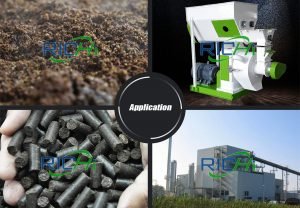
Organic waste from livestock farms, poultry operations, agricultural activities, and food-processing facilities can contain valuable nutrients and organic matter. Instead of treating these materials only as waste, they can often be processed into useful organic fertilizer products.
Pelletizing is one method of improving the physical form of composted organic materials. Loose compost can be bulky, dusty, and inconvenient to transport or apply. Converting it into pellets can increase bulk density, create a more uniform product, and make storage and handling easier.
However, producing consistent fertilizer pellets requires more than simply feeding compost into a pellet mill. Moisture, particle size, organic composition, decomposition level, and the intended fertilizer application all influence the production process.
This article looks at the major stages of organic fertilizer pellet production and explains how to approach equipment selection from a practical perspective.
What Materials Can Be Used to Make Compost Pellets?
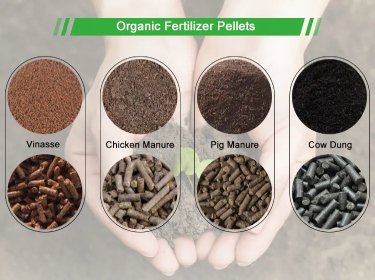
A wide range of organic materials can potentially be processed into fertilizer pellets after suitable treatment.
Common examples include:
- Cow manure
- Chicken manure
- Horse manure
- Sheep manure
- Pig manure
- Agricultural residues
- Crop straw
- Spent mushroom substrate
- Compost
- Other biodegradable organic residues
The characteristics of these materials vary considerably.
For example, fresh manure usually contains much more moisture than finished compost. Straw contains a relatively high proportion of fibrous material, while composted manure may have a more uniform structure.
These differences affect crushing, drying, mixing, and pelletizing requirements.
Therefore, the first step in designing a fertilizer pellet project is usually to identify the raw material rather than immediately selecting a machine.
Why Is Composting Important Before Pelletizing?
Fresh organic waste is not necessarily suitable for direct pellet production.
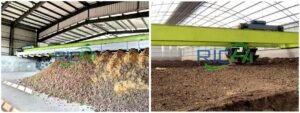
Animal manure and other organic residues can contain high moisture levels and biologically active materials. Composting allows microorganisms to break down part of the organic matter under controlled conditions.
A typical composting process involves managing:
- Moisture
- Oxygen supply
- Temperature
- Carbon-to-nitrogen balance
- Turning or aeration
- Composting time
The exact process depends on the raw material and local requirements.
After sufficient decomposition, the material becomes more stable and generally easier to process mechanically. Composting can also reduce the original bulkiness and change the physical structure of the material.
Pelletizing should therefore usually be viewed as a downstream processing stage rather than a replacement for composting.
What Moisture Content Is Suitable for Pellet Production?
Moisture is one of the most important factors in fertilizer pellet production.
Material with excessive moisture may be difficult to compress and can stick to the pelletizing equipment. It can also increase drying energy requirements and reduce production stability.
If the material is too dry, however, it may not compact effectively depending on its composition.
The suitable moisture range varies according to the raw material and equipment. Cow manure compost, poultry manure compost, and plant-based compost may all require different processing conditions.
For this reason, moisture should be measured rather than estimated visually.
A simple moisture test before processing can help operators determine whether additional drying is necessary.
What Preparation Is Needed Before Pelletizing?
Preparation normally includes cleaning, crushing, screening, and sometimes mixing.
Foreign materials such as stones, pieces of metal, plastic, rope, and other debris should be removed before the material enters the mechanical processing system.
Large particles may need to be crushed to create a more uniform feedstock.
The purpose of crushing is not necessarily to produce extremely fine powder. Instead, the goal is to create particles that can be fed consistently and compressed effectively.
If multiple organic materials are being combined, a mixer may also be required to achieve a more uniform composition.
A consistent feedstock generally makes downstream pelletizing easier to control.
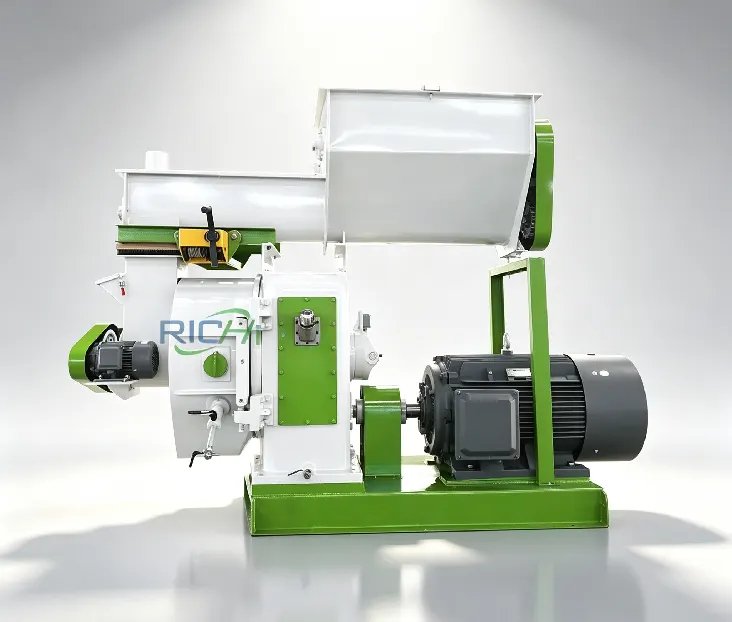
How Does a Compost Pellet Mill Work?
A compost pellet making machine compresses prepared organic material through a die under mechanical pressure.
As the material passes through the die openings, it is formed into cylindrical strands and then cut into pellets.
Pressure and friction can generate heat during this process. Depending on the characteristics of the compost, this can help particles bind together without relying heavily on synthetic binders.
The actual pelletizing performance depends on several variables, including:
- Moisture content
- Particle size
- Feed rate
- Die design
- Roller condition
- Material composition
- Compression ratio
For this reason, two composts with the same moisture content may still require different operating parameters.
How Does Pellet Diameter Affect the Final Product?
Pellet diameter should be selected according to the intended application.
Small fertilizer pellets can be convenient for certain spreading systems, while larger pellets may have different handling characteristics.
The pellet diameter is mainly determined by the die openings. Pellet length can be influenced by the cutting system and operating conditions.
Uniform dimensions can improve packaging, transportation, and mechanical application.
However, physical size is only one quality indicator. Nutrient content, moisture, durability, bulk density, and organic matter are also important when evaluating the final fertilizer.
How Should Cow Manure Be Processed?
Cow manure is widely available in many livestock-producing areas and can be converted into organic fertilizer after appropriate treatment.
Fresh cow manure usually has high moisture content, so direct pelletizing is often impractical. Composting and moisture reduction can make the material more suitable for mechanical processing.
After stabilization, the material may need crushing and screening before entering the pellet mill.
The final process can vary considerably depending on whether the manure is mixed with straw, bedding, or other agricultural residues.
A project using relatively dry composted cow manure may require a simpler process than one using fresh, high-moisture manure.
How to Choose Cow Dung Pellet Equipment?
When considering How to choose cow dung pellet making machine, it is useful to look beyond the machine’s nominal capacity.
First, examine the characteristics of the prepared cow dung compost. Moisture, particle size, density, and organic composition all affect pelletizing performance.
Second, consider the required output. A small farm producing a few hundred kilograms per hour has different equipment requirements from a commercial fertilizer plant producing several tons per hour.
Third, consider the complete process. If the raw material requires substantial drying or crushing, the pellet mill alone cannot determine the overall production capacity.
Maintenance should also be considered. Dies, rollers, bearings, belts, and other components experience wear during continuous operation.
A practical equipment selection process therefore combines raw material testing, production requirements, and long-term operating considerations.
Related Post: https://commercialpelletmill.com/cow-dung-pellet-making-machine/
Can Chicken Manure Be Made Into Fertilizer Pellets?
Chicken manure can contain significant amounts of nutrients, including nitrogen, phosphorus, and potassium. However, its nutrient concentration can vary depending on poultry feed, bird age, bedding materials, and farm management.
Like other animal manures, chicken manure should generally undergo appropriate treatment before being processed into a finished fertilizer product.
After composting and moisture adjustment, the material can be crushed, screened, and pelletized.
The final product should be tested to determine nutrient content and other relevant characteristics.
This is particularly important because fertilizer application rates should be based on actual nutrient concentrations rather than assumptions.
What Should You Look for When Buying Equipment?
Searches for chicken manure pellet machine for sale can produce many different equipment configurations, but the machine price alone does not provide enough information to compare them.
Buyers should first determine whether the equipment is suitable for the specific chicken manure formulation being processed.
Questions worth asking include:
- What moisture range is recommended?
- What raw material has been tested?
- What is the realistic production capacity?
- What pellet sizes can be produced?
- What is the expected electricity consumption?
- How frequently do wear parts need replacement?
- Is drying equipment necessary?
- What cooling capacity is required?
- How are fines handled?
A lower initial equipment price may not necessarily mean a lower total project cost if additional machinery is required later.
Is Drying Always Necessary?
Drying is determined mainly by the initial moisture level and the desired condition for pelletizing.
If compost has already reached a suitable moisture level through controlled storage and natural moisture reduction, additional thermal drying may be limited.
For wetter materials, however, a dryer may become necessary.
Thermal drying can consume considerable energy, so moisture management before drying is important.
Covered storage, proper drainage, and appropriate composting practices can prevent the material from absorbing additional water.
The dryer should also be sized according to actual throughput. An oversized dryer may operate inefficiently when the production volume is significantly below its rated capacity.
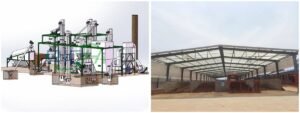
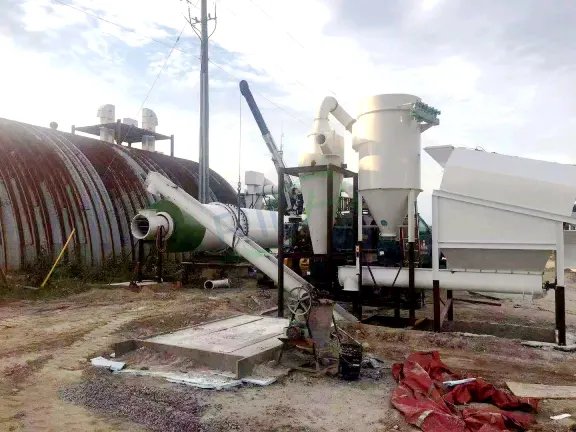
What Equipment Is Usually Included in a Fertilizer Pellet Line?
A complete organic fertilizer pellet production line may contain several stages.
A simplified process can be:
Raw material receiving → composting → crushing → screening → mixing → drying if required → pelletizing → cooling → screening → packing → storage
Not every project requires every stage.
For example, if the compost already has suitable moisture and particle size, drying or intensive crushing may be unnecessary.
On the other hand, a project processing several different raw materials may require additional mixing and screening equipment.
The plant should therefore be designed around the actual material flow.
Why Is Cooling Important?
Fresh fertilizer pellets can retain heat after compression.
Cooling helps bring the pellets closer to ambient temperature before packaging and storage. It can also improve their physical stability.
If hot pellets are packed immediately, condensation or moisture migration can potentially affect storage quality.
The cooling system should have sufficient capacity to match the pellet mill’s actual output.
After cooling, screening can remove broken pellets and fines. Depending on the production process, fines can often be recycled into the pelletizing stage.
This helps reduce material loss and improve overall production efficiency.
How Should Finished Compost Pellets Be Stored?
Finished pellets should be kept in a dry environment.
Moisture can cause organic fertilizer pellets to soften and lose their shape. It can also increase the amount of fines during transportation.
Storage facilities should therefore protect the product from rain, groundwater, and excessive humidity.
Bags should be properly sealed when packaged fertilizer is intended for longer-term storage.
Bulk storage requires similar attention. The floor should remain dry, and the storage area should allow sufficient ventilation and easy loading.
Storage capacity should be calculated according to production volume and shipping frequency.
What Quality Indicators Should Be Tested?
There is no single measurement that completely defines fertilizer pellet quality.
Common indicators include:
- Moisture
- Pellet durability
- Bulk density
- Particle size
- Nutrient content
- Organic matter
- Ash
- Amount of fines
For commercial fertilizer products, nutrient analysis is particularly important.
Nitrogen, phosphorus, and potassium concentrations can vary between batches of manure-based fertilizer. Laboratory testing can therefore provide more reliable information than assuming a fixed nutrient content.
The appropriate quality requirements also depend on local fertilizer regulations and the intended agricultural application.
Can Different Organic Materials Be Mixed?
Blending can be useful when individual raw materials have different physical characteristics.
For example, a wetter material may be mixed with a drier organic residue to improve the overall feedstock condition.
Different materials can also be combined to create a fertilizer with a more balanced nutrient profile.
However, blending should be based on a defined product objective.
Simply mixing materials because they are available may create inconsistent nutrient content or unstable pelletizing behavior.
A basic formulation and laboratory analysis can help determine whether the proposed mixture is appropriate.
What Determines the Production Capacity?
Production capacity depends on more than the rated capacity of the pellet mill.
The overall output can be limited by the slowest stage in the production line.
For example, if the pellet mill can process two tons per hour but the dryer can only prepare one ton per hour, the complete plant cannot sustainably produce two tons per hour.
Similarly, insufficient cooling, screening, or packaging capacity can create downstream bottlenecks.
Capacity planning should therefore consider the complete process.
Important factors include:
- Raw material availability
- Moisture
- Operating hours
- Pellet mill capacity
- Dryer capacity
- Cooling capacity
- Packaging speed
- Storage capacity
This approach provides a more realistic production estimate.
How Can Operating Costs Be Controlled?
Operating costs generally include electricity, fuel, labor, maintenance, packaging, transportation, and raw material handling.
Drying can represent a significant energy expense when high-moisture material is used.
Electricity consumption can also increase if crushing equipment or pellet mills operate under unsuitable conditions.
Preventive maintenance helps keep equipment operating efficiently. Worn rollers, dies, bearings, and transmission components can affect both energy consumption and production stability.
Labor requirements can be reduced through appropriate automation, but excessive automation may not be economically justified for a small plant.
The right balance depends on production scale and local labor costs.
What Safety Measures Are Needed?
Organic fertilizer production involves dust, moving equipment, heat, and biological materials.
Workers should receive appropriate training and use suitable protective equipment.
Crushing and screening stages can generate dust, making ventilation and dust collection important.
Moving parts should have appropriate guarding, and emergency stop systems should be accessible.
If a thermal dryer is used, additional precautions are needed around hot air, combustion systems, and exhaust equipment.
Good housekeeping is also important. Accumulated organic dust and spilled material should be removed regularly.
Safety should be considered during plant design rather than added after installation.
How Large Should a Fertilizer Pellet Plant Be?
Plant size should reflect the available raw material and expected market demand.
A small farm may only have enough manure to support a relatively small production system. Building a much larger plant would leave expensive equipment underutilized.
A commercial operation with access to multiple livestock farms may have a different situation.
Before deciding on plant capacity, it is useful to calculate the average daily raw material supply and consider seasonal fluctuations.
Transportation should also be included. If manure must be collected from distant farms, logistics can become a major part of the operating cost.
What Information Should Be Prepared Before Purchasing Equipment?
A detailed equipment inquiry should include as much raw material information as possible.
Useful information includes:
- Raw material type
- Daily quantity
- Initial moisture
- Composting condition
- Particle size
- Bedding material
- Desired production capacity
- Pellet diameter
- Final application
- Packaging method
- Available plant space
- Local electricity conditions
Providing this information allows equipment suppliers to recommend a process based on actual conditions.
Photographs and representative raw material samples can also be useful for technical evaluation.
Why Is Raw Material Testing Useful?
Organic materials are naturally variable.
Two batches of cow manure may have different moisture content because of differences in bedding and storage. Chicken manure can also vary depending on poultry management practices.
Testing helps identify these differences before equipment is purchased.
Pilot pelletizing can provide information about:
- Suitable moisture
- Pellet durability
- Production stability
- Required die configuration
- Energy consumption
- Amount of fines
This information can reduce uncertainty when designing a commercial production line.
What Should You Ask an Equipment Manufacturer?
When comparing equipment suppliers, technical questions can provide more useful information than promotional specifications.
Ask about the raw materials used during equipment testing and whether the stated capacity is based on similar feedstock.
It is also useful to ask about recommended moisture ranges, die specifications, wear-part life, electricity requirements, cooling systems, and maintenance intervals.
For larger projects, a complete process proposal can help identify potential bottlenecks before installation.
This is especially important when drying, crushing, mixing, and packaging are all required.
Where Can You Find More Information About Organic Fertilizer Processing?
Technical information about manure treatment, composting, crushing, pelletizing, cooling, and packaging can help project planners understand how the different stages work together.
Manufacturers and engineering companies often publish process descriptions and equipment information for different organic fertilizer applications. Pellet mill for sale is one example of a machinery manufacturer that can be considered when researching organic fertilizer and pellet processing equipment.
When reviewing technical information, it is useful to compare actual specifications rather than relying only on general descriptions.
The most relevant factors are usually raw material characteristics, production capacity, energy requirements, equipment configuration, and maintenance conditions.
Conclusion
Producing fertilizer pellets from composted organic waste involves a series of interconnected processes. Composting, moisture control, crushing, mixing, pelletizing, cooling, screening, and storage all influence the final result.
The most important consideration is the raw material. Cow manure, chicken manure, agricultural residues, and other organic materials behave differently during processing, so there is no universal equipment configuration suitable for every project.
A practical approach begins with raw material testing and a clear understanding of the intended fertilizer product. From there, the required processing stages and equipment capacity can be determined.
Pelletizing can make organic fertilizer easier to handle, store, transport, and apply, but the equipment should always be selected as part of a complete process rather than as an isolated machine.
With suitable pretreatment, moisture management, quality control, and equipment maintenance, composted organic materials can be converted into a more uniform fertilizer product while making better use of agricultural and livestock waste.