Building a commercial wood pellet plant is not only an equipment purchasing decision. For investors, the real challenge starts after the order is confirmed: preparing the production site, coordinating utilities, installing equipment correctly, completing commissioning, and reaching stable commercial operation.
A successful wood pellet project requires cooperation between the equipment supplier, engineering team, construction workers, and plant operators. The final production result depends on how well the entire project is planned and implemented from the beginning.
Why Project Implementation Determines Wood Pellet Plant Performance
Many industrial buyers initially compare production capacity, machine models, and investment cost. These factors are important, but they do not independently determine whether a pellet plant can achieve stable commercial operation.
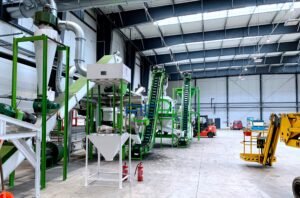
A wood pellet plant is an integrated production system. Raw material receiving, crushing, drying, pelletizing, cooling, screening, storage, and packaging must work together. A problem in one section can influence the performance of the entire line.
Site Preparation Before Equipment Delivery
The first step of implementation is confirming whether the selected factory can support the planned production capacity. Buyers should review building dimensions, equipment foundation requirements, transportation access, storage areas, and future expansion possibilities.
- Factory height and available floor space
- Electrical power supply capacity
- Raw material storage conditions
- Finished pellet storage arrangement
- Maintenance and inspection access
A well-prepared site reduces installation delays and prevents costly modifications after equipment arrival. It also provides operators with a safer and more efficient working environment.
Utility Planning for Reliable Operation
Industrial pellet production requires stable supporting systems. Electricity, drying energy, dust control, and material handling systems must be considered during project planning.
The electrical system should match the total installed power of motors and auxiliary equipment. Proper cable routing, control cabinet positioning, and safety protection help maintain reliable operation.
Moisture control is another critical factor. Wood materials with different moisture levels may require different preparation strategies before pelletizing. A properly designed drying and conditioning process improves production stability.
Installation and Process Integration
Equipment installation is where engineering design becomes a real production system. The installation team must follow the process layout and ensure correct connections between different machines.
- Mechanical assembly and alignment
- Electrical connection and testing
- Conveyor and pipeline integration
- Control system configuration
- Safety inspection
Small installation details can influence long-term performance. Correct alignment, suitable maintenance space, and reliable connections help reduce unexpected downtime.
Commissioning: Moving from Installation to Production
Commissioning is not simply turning on machines. It is the process of adjusting the complete production system according to actual raw materials and operating conditions.
- No-load equipment testing
- Material feeding adjustment
- Pellet quality evaluation
- Production parameter optimization
- Operator training
The purpose of commissioning is to establish repeatable operating conditions. A plant should be able to maintain stable production after the technical team completes the startup process.
Operator Training and Production Management
Even a well-designed production line requires skilled operators. Daily operation decisions influence pellet quality, energy consumption, and equipment lifespan.
- Startup and shutdown procedures
- Routine inspection methods
- Lubrication schedules
- Wear part management
- Troubleshooting procedures
Operators who understand the relationship between raw materials, machine settings, and final pellet quality can respond faster when production conditions change.
Establishing a Stable Production Baseline
After commissioning, the plant enters the ramp-up stage. During this period, managers should record important production information and compare actual results with project expectations.
- Hourly production output
- Energy consumption
- Raw material moisture
- Finished pellet quality
- Maintenance requirements
These records help identify improvement opportunities and create standard operating procedures for long-term production.
Reducing Project Risks Through Early Coordination
Many problems in new pellet projects are caused by insufficient preparation rather than equipment limitations. Early technical communication between buyers and suppliers can prevent many common issues.
Important discussions should include production targets, raw material characteristics, factory conditions, installation responsibilities, and commissioning plans.
Selecting the Right Project Partner
For commercial investors, a supplier should provide more than individual machines. Engineering capability, project experience, installation guidance, and technical support are important factors when evaluating a long-term partner.
Companies planning a biomass investment should evaluate suppliers that provide a complete wood pellet plant solution together with professional implementation experience.
Final Checks Before Commercial Production
Before a wood pellet plant moves into full commercial operation, the management team should complete a final review of all production conditions. This includes confirming that operators understand the workflow, maintenance schedules are established, and the production team can respond to common operating situations.
A practical startup review should examine whether material flow is smooth, whether storage systems match production capacity, and whether quality control procedures are ready. These checks help transform a newly installed facility into a dependable manufacturing operation.
Project owners should also consider the relationship between current production goals and future business development. A properly planned plant can provide opportunities for adding equipment, improving automation, or increasing capacity when market demand grows.
The implementation stage is therefore a critical investment period. Decisions made before and during installation influence not only the initial startup but also years of future operation. A carefully managed project creates a stronger foundation for consistent production, easier maintenance, and better return on investment.
For industrial buyers, the most valuable outcome is not simply receiving equipment. It is achieving a complete production capability that combines suitable technology, correct engineering, trained personnel, and reliable operating procedures. This approach helps companies build a sustainable wood pellet business rather than only installing individual machines.
Conclusion
A successful wood pellet plant depends on coordinated planning, site preparation, installation, commissioning, and operation management. Treating implementation as a complete industrial project helps investors reduce risks and build reliable long-term production.
Commercial pellet projects also benefit from a clear responsibility plan before construction begins. The buyer, supplier, and local contractors should understand who manages civil preparation, equipment installation, electrical work, testing, and operator training. Clear communication reduces delays and avoids confusion during critical project stages.
Another important consideration is future expansion. Some investors begin with a specific production target but later increase capacity as market demand grows. A flexible layout and suitable supporting infrastructure can make future upgrades easier and reduce additional investment pressure.
Raw material planning should also be included in the implementation strategy. Stable access to suitable wood residues, consistent moisture conditions, and reliable storage arrangements are essential for continuous production. A technically complete plant still requires a dependable material supply chain to operate efficiently.
Before commercial production begins, managers should establish maintenance procedures and spare part planning. Preventive maintenance helps protect production continuity and allows the plant team to manage equipment performance more effectively.
For investors building a new biomass processing business, project success depends on combining suitable equipment with disciplined implementation. The most reliable plants are usually those where engineering decisions, construction preparation, and operating procedures are considered together from the beginning.
Commercial pellet projects also benefit from a clear responsibility plan before construction begins. The buyer, supplier, and local contractors should understand who manages civil preparation, equipment installation, electrical work, testing, and operator training. Clear communication reduces delays and avoids confusion during critical project stages.
Another important consideration is future expansion. Some investors begin with a specific production target but later increase capacity as market demand grows. A flexible layout and suitable supporting infrastructure can make future upgrades easier and reduce additional investment pressure.
Raw material planning should also be included in the implementation strategy. Stable access to suitable wood residues, consistent moisture conditions, and reliable storage arrangements are essential for continuous production. A technically complete plant still requires a dependable material supply chain to operate efficiently.
Before commercial production begins, managers should establish maintenance procedures and spare part planning. Preventive maintenance helps protect production continuity and allows the plant team to manage equipment performance more effectively.
For investors building a new biomass processing business, project success depends on combining suitable equipment with disciplined implementation. The most reliable plants are usually those where engineering decisions, construction preparation, and operating procedures are considered together from the beginning.
Commercial pellet projects also benefit from a clear responsibility plan before construction begins. The buyer, supplier, and local contractors should understand who manages civil preparation, equipment installation, electrical work, testing, and operator training. Clear communication reduces delays and avoids confusion during critical project stages.
Another important consideration is future expansion. Some investors begin with a specific production target but later increase capacity as market demand grows. A flexible layout and suitable supporting infrastructure can make future upgrades easier and reduce additional investment pressure.
Raw material planning should also be included in the implementation strategy. Stable access to suitable wood residues, consistent moisture conditions, and reliable storage arrangements are essential for continuous production. A technically complete plant still requires a dependable material supply chain to operate efficiently.
Before commercial production begins, managers should establish maintenance procedures and spare part planning. Preventive maintenance helps protect production continuity and allows the plant team to manage equipment performance more effectively.
For investors building a new biomass processing business, project success depends on combining suitable equipment with disciplined implementation. The most reliable plants are usually those where engineering decisions, construction preparation, and operating procedures are considered together from the beginning.