Cow manure is one of the most widely available organic materials for fertilizer production. Instead of treating fresh cow manure as agricultural waste, farmers, livestock farms, and fertilizer manufacturers can process it into valuable organic fertilizer products. Properly processed cow manure fertilizer can improve soil structure, increase organic matter, and provide nutrients for crops.
However, making organic fertilizer from cow manure is not simply a matter of drying and packaging the manure. Fresh cow manure contains a high amount of moisture and organic matter, and it may contain weed seeds, pathogens, unpleasant odors, and other materials that need to be controlled during processing. A suitable production process is therefore important for producing a stable, safe, and easy-to-use fertilizer.
For commercial production, a complete cow manure fertilizer production line may include manure collection, fermentation, crushing, mixing, granulation, drying, cooling, screening, coating, and packing equipment. Depending on the required product shape and production capacity, a cow dung pellet making machine can be used to convert processed cow manure into uniform fertilizer pellets.
This article explains how to make organic fertilizer from cow manure, what processing steps are required, and what equipment can be used for small-scale and industrial production.
Why Use Cow Manure to Make Organic Fertilizer?
Cow manure contains organic matter and plant nutrients, making it a useful raw material for organic fertilizer production. Large dairy farms and cattle farms can produce significant quantities of manure every day. If this material is not properly managed, it can create storage, odor, wastewater, and environmental problems.
Processing cow manure into fertilizer provides a way to recover part of its agricultural value.
The main advantages include:
- Recycling livestock waste into an agricultural input
- Reducing the volume of untreated manure requiring disposal
- Producing organic fertilizer for crop production
- Improving soil organic matter
- Supporting better manure management
- Creating an additional source of revenue for farms
- Producing pelletized fertilizer that is easier to handle and transport
Cow manure can be used alone or blended with other organic materials. Depending on the fertilizer formula, producers may combine cow manure with poultry manure, straw, compost, crop residues, peat, agricultural waste, or other organic materials.
The final formulation should be determined according to the desired nutrient content, raw material characteristics, and local fertilizer requirements.
Can Fresh Cow Manure Be Used Directly as Fertilizer?
Fresh cow manure is generally not the ideal form for direct application.
Fresh manure usually contains a high moisture level and has active biological activity. It may also contain microorganisms, weed seeds, and undecomposed organic compounds. Applying large quantities of fresh manure directly to crops can create problems such as unpleasant odors, nutrient losses, crop damage, and hygiene concerns.
For this reason, cow manure is normally processed through a controlled fermentation or composting stage before it is converted into finished organic fertilizer.
The basic principle is:
Fresh cow manure → Fermentation → Crushing → Mixing → Granulation → Drying → Cooling → Screening → Packing
For some fertilizer products, additional steps such as coating or fine crushing may be added.
Step 1: Collect and Prepare Cow Manure
The first step is collecting cow manure from the farm or livestock operation.
The manure may contain bedding materials such as straw, hay, sawdust, or other organic residues. It can also contain stones, metal pieces, plastic, ropes, and other unwanted materials.
Before further processing, these contaminants should be removed.
The raw material preparation stage may include:
- Manure collection
- Temporary storage
- Removal of large contaminants
- Preliminary screening
- Moisture testing
- Transportation to the fermentation area
The initial moisture content is particularly important because it affects fermentation, crushing, conveying, and subsequent granulation.
If the manure is extremely wet, the production process may require additional dewatering or drying capacity.
Step 2: Ferment the Cow Manure
Fermentation is one of the most important steps in making organic fertilizer from cow manure.
During controlled composting, microorganisms break down easily degradable organic matter. The temperature of the material rises as biological activity increases. Proper fermentation can help stabilize the manure and reduce odors.
A typical fermentation process may involve:
- Building manure piles or fermentation windrows
- Adjusting moisture
- Adding suitable microbial preparations when required
- Turning the material regularly
- Monitoring temperature
- Allowing sufficient fermentation time
- Checking the condition of the compost before further processing
Moisture needs to be controlled because microorganisms require water for biological activity, while excessive moisture can reduce aeration.
Aeration is also important. Turning the pile helps introduce oxygen and redistribute heat and moisture.
For larger fertilizer plants, mechanical compost turners can be used to improve production efficiency and make the fermentation process more consistent.
The exact fermentation time depends on the raw material, climate, pile size, moisture, aeration, microbial activity, and production method.
Step 3: Crush the Fermented Manure
After fermentation, the composted cow manure may still contain large particles or compacted lumps.
A crushing machine can be used to reduce these materials into a more uniform particle size.
This step is important because uniform raw material improves the performance of subsequent mixing and granulation.
A suitable organic fertilizer crusher can help:
- Break up compacted compost
- Reduce large particles
- Improve material uniformity
- Improve mixing performance
- Reduce the risk of blockages
- Prepare the material for granulation
The crusher should be selected according to the moisture and physical characteristics of the fermented manure.
If the material is still too wet, crushing performance may be poor because wet organic material can stick to the crushing chamber or screen.
Therefore, moisture control and crushing should be considered together rather than as completely separate processes.
Step 4: Mix Cow Manure With Other Materials
Not every organic fertilizer product needs to contain 100% cow manure.
In commercial production, manufacturers may develop different formulas according to the target crop and fertilizer requirements.
Cow manure can be mixed with materials such as:
- Poultry manure
- Sheep manure
- Horse manure
- Straw
- Rice husk
- Sawdust
- Crop residues
- Compost
- Other organic materials
- Mineral or nutrient additives when appropriate
A fertilizer mixer is used to distribute the components evenly.
Uniform mixing is particularly important when additional nutrients or additives are included. Poor mixing can cause variations in nutrient concentration between fertilizer pellets.
The mixing formula should be determined before selecting the granulation equipment because different formulations have different moisture, density, fiber, and binding characteristics.
Step 5: Adjust Moisture Before Granulation
Moisture control is essential for pelletized organic fertilizer.
If the material is too dry, it may be difficult to form stable pellets. If it is too wet, the material may stick to the granulator, form oversized lumps, or require excessive drying afterward.
The suitable moisture range depends on the raw material and granulation technology.
Therefore, instead of using one moisture value for every cow manure fertilizer plant, producers should determine the appropriate moisture level through raw-material testing and equipment trials.
Moisture should also be relatively uniform throughout the material.
A moisture sensor or laboratory moisture testing system can help operators monitor changes during production.
Step 6: Granulate the Cow Manure
Once the fermented and prepared cow manure reaches suitable processing conditions, it can be converted into fertilizer granules.
Granulation changes loose organic material into a more uniform product that is easier to store, transport, apply, and package.
Different granulation technologies are available for organic fertilizer production.
Depending on the formulation and desired product, producers may use:
- Organic fertilizer granulators
- Disc granulators
- Drum granulators
- Flat die granulators
- Ring die pellet machines
- Other customized granulation systems
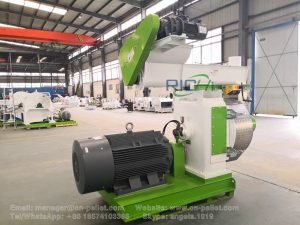
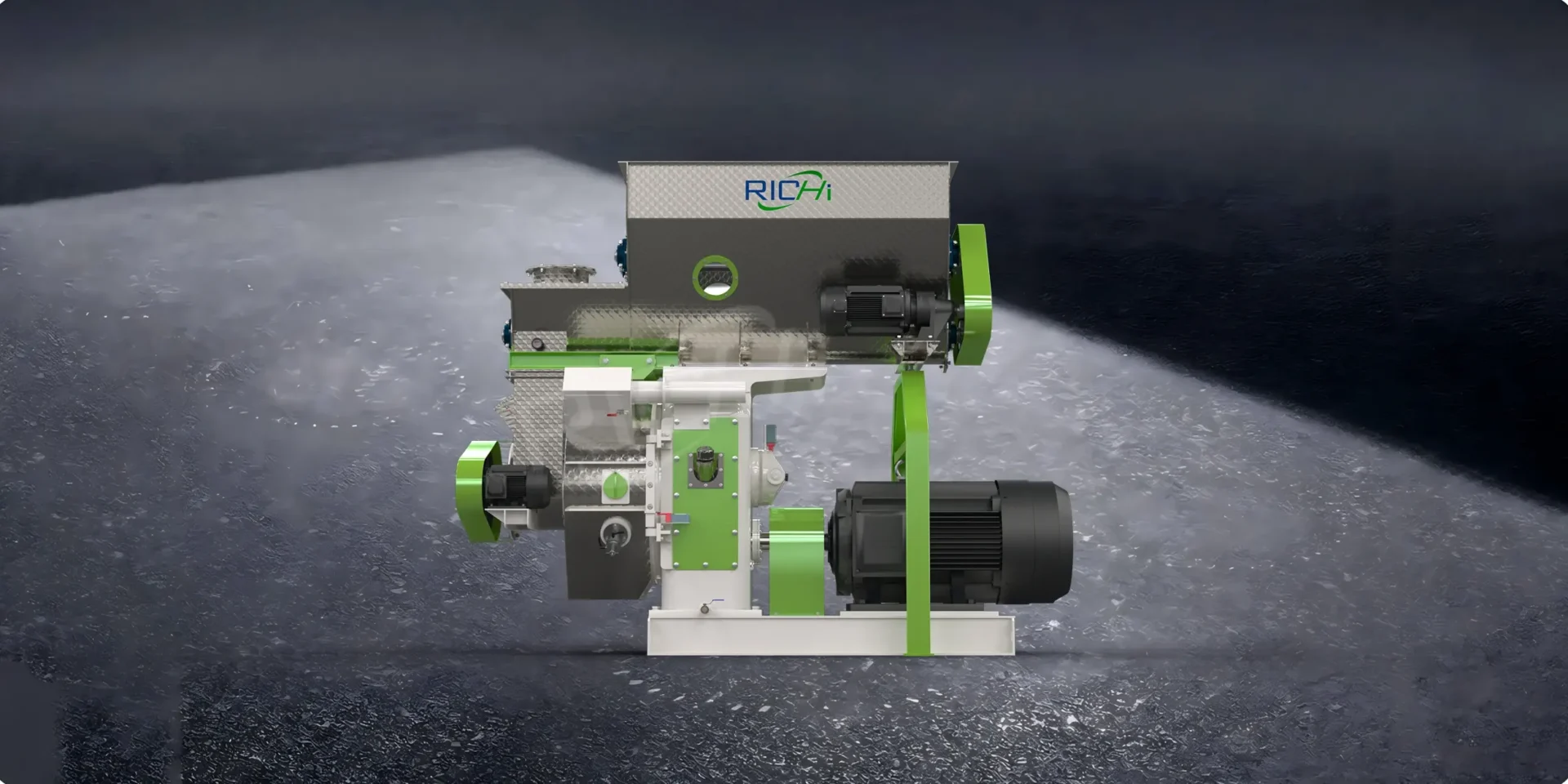
For pelletized cow manure fertilizer, a cow dung pellet making machine can be integrated into a complete production line.
The machine compresses or forms prepared organic material into cylindrical pellets of a controlled diameter. The appropriate machine depends on the required capacity, pellet diameter, raw material properties, and final application.
For example, a farm producing fertilizer for its own fields may require a different solution from a commercial fertilizer manufacturer producing several tons per hour.
(Related machine: https://pelletisingmachine.com/cow-dung-pellet-making-machine/)
Step 7: Choose the Right Cow Dung Pellet Making Machine
Selecting a cow dung pellet making machine requires more than looking at the advertised capacity.
Several technical factors should be considered.
Raw Material Characteristics
The machine must be compatible with the physical properties of fermented cow manure.
Important characteristics include:
- Moisture content
- Particle size
- Fiber content
- Organic matter content
- Bulk density
- Stickiness
- Formulation
A machine designed for dry biomass pellets may not necessarily be suitable for every organic fertilizer formulation.
Required Capacity
Production capacity is another major consideration.
Small farms may only need a relatively small fertilizer processing system, while commercial plants may require continuous high-capacity production.
The capacity should be calculated based on the actual raw material availability and planned operating hours.
For example, a plant with a large theoretical capacity may not be economical if the farm cannot provide enough manure to keep the equipment operating efficiently.
Pellet Diameter
Different crops and fertilizer markets may require different pellet sizes.
The pellet diameter is affected by the forming system and die configuration.
Before purchasing equipment, the producer should clearly define the desired pellet diameter and product specifications.
Equipment Durability
Cow manure fertilizer production is a continuous mechanical process. Contact with abrasive particles and repeated compression can cause wear to components.
Important wear parts may include:
- Dies
- Rollers
- Cutting components
- Bearings
- Screens
- Internal liners
Easy access to wear parts can simplify maintenance and reduce downtime.
Automation
A larger fertilizer plant may benefit from automatic control of feeding, mixing, granulation, drying, cooling, screening, and packing.
Automation can help maintain more stable operating conditions and reduce dependence on manual handling.
Step 8: Dry the Fertilizer Pellets
Freshly formed organic fertilizer pellets often contain more moisture than required for storage and transportation.
A fertilizer dryer can reduce the moisture content to a suitable final level.
An industrial rotary dryer machine is commonly used for continuous industrial drying applications. Hot air contacts the fertilizer material while the rotating drum moves and redistributes the pellets.
A typical drying system may include:
- Rotary dryer
- Hot air furnace or other heat source
- Feeding equipment
- Exhaust fan
- Cyclone
- Dust collection system
- Temperature monitoring
- Electrical control system
Drying temperature should be controlled carefully.
Higher temperature does not automatically mean better drying. Excessive heat can waste energy and may negatively affect certain fertilizer formulations.
The correct drying conditions depend on pellet moisture, fertilizer composition, pellet strength, dryer design, airflow, residence time, and final product requirements.
Step 9: Cool the Fertilizer Pellets
After drying, the fertilizer pellets may still have an elevated temperature.
A cooling machine can reduce pellet temperature before screening and packaging.
Cooling is useful because it can:
- Improve pellet handling
- Reduce condensation risks
- Improve storage stability
- Help protect packaging materials
- Prepare pellets for final screening
A counterflow cooler or other suitable fertilizer cooling system can be selected according to the production capacity and pellet characteristics.
The cooling process should provide relatively uniform temperature reduction rather than cooling only the surface of the material.
Step 10: Screen the Finished Fertilizer
After cooling, the fertilizer pellets should be screened.
Not every pellet will have exactly the same size. The screening system separates:
- Qualified fertilizer pellets
- Oversized particles
- Undersized particles
- Powder or fines
Qualified pellets can continue to the packing system.
Oversized material may be crushed and returned to the production process, while fines may also be recycled depending on the production design.
A closed-loop recycling system can improve raw material utilization and reduce product loss.
Step 11: Coat the Fertilizer if Necessary
Some commercial organic fertilizer products may require a coating process.
A coating machine can apply a controlled layer of coating material to the pellet surface.
Depending on the product design, coating may be used to improve:
- Appearance
- Flowability
- Dust control
- Storage characteristics
- Product differentiation
The coating formula should be selected according to the fertilizer product and local regulations.
Not every cow manure fertilizer plant requires a coating system.
Step 12: Pack the Finished Cow Manure Fertilizer
After screening and optional coating, the finished fertilizer can be packed.
Automatic packing equipment can weigh and fill the pellets into bags of different sizes.
Common packaging sizes depend on the market and distribution method.
For agricultural users, larger bags may be convenient for field application. Retail fertilizer products may use smaller packages.
A complete packing system may include:
- Automatic weighing scale
- Bag filling machine
- Bag sewing or sealing machine
- Conveyor
- Bag collection system
Proper packaging helps protect the fertilizer from moisture and contamination during storage and transportation.
Complete Cow Manure Fertilizer Production Process
A commercial organic fertilizer production line can be designed according to raw material conditions and final product requirements.
A typical process is:
Cow Manure Collection → Cleaning → Fermentation → Crushing → Mixing → Granulation → Drying → Cooling → Screening → Coating → Packing
The process can be customized.
For example, a small farm may use:
Cow Manure → Composting → Crushing → Pelletizing → Screening → Packing
A larger commercial fertilizer plant may use:
Raw Material Receiving → Cleaning → Fermentation → Crushing → Batching → Mixing → Granulation → Drying → Cooling → Screening → Coating → Automatic Packing
Additional storage silos, conveyors, dust collection equipment, and electrical control systems can also be integrated.
What Equipment Is Needed to Make Organic Fertilizer From Cow Manure?
The equipment required depends on the production scale.
A complete production line may contain:
1. Compost Turner
Used to turn and aerate cow manure during fermentation.
2. Crushing Machine
Used to break fermented manure and reduce oversized particles.
3. Fertilizer Mixer
Used to mix cow manure with other organic materials or fertilizer ingredients.
4. Cow Dung Pellet Making Machine
Used to form prepared cow manure fertilizer into uniform pellets.
5. Fertilizer Dryer
Used to reduce moisture after pellet formation.
6. Fertilizer Cooler
Used to reduce pellet temperature after drying.
7. Vibrating Screen
Used to separate qualified pellets from fines and oversized particles.
8. Coating Machine
Used when the fertilizer requires surface coating.
9. Packing Machine
Used to automatically weigh and package finished fertilizer.
10. Conveyors and Elevators
Used to move material between processing stages.
11. Dust Collection System
Used to collect dust generated during crushing, screening, conveying, and other processing stages.
How to Make Cow Manure Fertilizer Pellets on a Small Scale
Small farms do not necessarily need a large automated fertilizer factory.
A small-scale project may use a simpler process.
For example:
Cow Manure → Fermentation → Crushing → Pelletizing → Screening → Packing
The farmer can collect manure from the cattle operation, compost it properly, crush the fermented material, adjust moisture, and feed it into a small pelletizing system.
However, even a small plant should pay attention to:
- Raw material moisture
- Fermentation quality
- Particle size
- Pellet diameter
- Machine feeding
- Pellet strength
- Drying requirements
- Storage conditions
Small-scale production can also be expanded later by adding drying, cooling, automatic packing, and additional processing equipment.
How to Make Cow Manure Fertilizer for Commercial Production
Commercial production requires more systematic process control.
The plant should begin with an assessment of:
- Daily cow manure availability
- Initial moisture
- Seasonal changes
- Desired fertilizer formula
- Required pellet diameter
- Target production capacity
- Available factory space
- Energy source
- Packaging requirements
- Local fertilizer regulations
A complete process design can then be developed.
For example, if the raw material is very wet, the project may require greater drying capacity. If the manure contains a large amount of straw, additional crushing or screening equipment may be necessary.
If several raw materials are used, automatic batching and mixing systems become more important.
This is why complete fertilizer plants should be designed around the raw materials and final product rather than simply assembling individual machines.
Factors That Affect Cow Manure Fertilizer Pellet Quality
Pellet quality depends on multiple factors.
Moisture
Incorrect moisture can lead to weak pellets, excessive fines, sticking, or unstable production.
Particle Size
More uniform particles generally provide more consistent feeding and forming conditions.
Fermentation
Properly fermented manure is easier to process and provides more stable raw material characteristics.
Formula
Different combinations of manure and organic materials can change pellet formation behavior.
Granulation Pressure
The forming pressure and machine configuration affect pellet density and strength.
Die Condition
Worn or damaged forming components can reduce production consistency.
Drying
Excessive or insufficient drying can affect storage stability and pellet properties.
Cooling
Proper cooling helps prepare pellets for screening and packaging.
Screening
Final screening removes unsuitable particles and improves product uniformity.
Therefore, pellet quality should be managed across the entire production process rather than relying only on the pelletizing machine.
How Much Does a Cow Manure Fertilizer Production Line Cost?
The cost of a cow manure fertilizer production line varies significantly.
There is no single price that applies to every project because the equipment configuration can be very different.
The major cost factors include:
- Production capacity
- Raw material moisture
- Fermentation system
- Crushing equipment
- Mixing system
- Granulator or pellet machine
- Drying capacity
- Cooling equipment
- Screening system
- Coating system
- Packing automation
- Conveyors
- Dust collection
- Electrical control system
- Factory layout
- Installation requirements
A small fertilizer pelletizing system may require relatively limited equipment, while a large turnkey plant can include many interconnected machines.
For an accurate quotation, suppliers normally need information about the raw material, moisture, desired capacity, pellet size, fertilizer formula, and automation level.
How to Improve Cow Manure Fertilizer Production Efficiency
Several practices can improve overall production efficiency.
Maintain Stable Raw Materials
Large changes in moisture and particle size can make the production process unstable.
Control Fermentation
Consistent composting conditions provide more predictable material for downstream processing.
Avoid Excessive Crushing
The goal is suitable particle size, not necessarily the finest possible material. Excessive grinding can increase electricity consumption and dust generation.
Control Feeding
Stable feeding helps maintain consistent machine load and product quality.
Monitor Moisture
Moisture should be checked at important stages, especially before granulation and after drying.
Maintain Wear Parts
Regularly inspect dies, rollers, screens, bearings, and other components.
Use Proper Dust Collection
Dust collection can improve the working environment and reduce material loss. Biomass and organic fertilizer dust should also be managed according to applicable workplace and fire-safety requirements.
Automate Where Practical
Automatic feeding, temperature control, screening, and packing can reduce manual labor and improve consistency in larger plants.
Why Choose a Complete Cow Manure Fertilizer Solution?
A cow manure fertilizer project involves many interconnected processing stages.
For this reason, buying individual machines without considering the complete process can create problems with capacity matching, material transfer, moisture control, and equipment coordination.
A complete solution can be designed around:
Raw Material → Processing Capacity → Fertilizer Formula → Pellet Specification → Drying Requirement → Packaging Requirement
RICHI Pellet Machine can provide customized fertilizer processing solutions covering equipment selection, production line design, equipment manufacturing, installation, commissioning, and technical support.
The system can include manure fermentation, crushing, mixing, pelletizing, drying, cooling, screening, coating, packing, conveying, dust collection, and electrical control.
This approach allows each processing stage to be matched with the next stage.
Frequently Asked Questions
Can cow manure be made into organic fertilizer pellets?
Yes. Properly fermented and processed cow manure can be formed into organic fertilizer pellets. The exact process depends on moisture, particle size, formulation, and the desired pellet specifications.
Do I need to ferment cow manure before pelletizing?
In most organic fertilizer production processes, fermentation or composting is used before granulation to stabilize the manure and improve its processing characteristics.
What machine is used to make cow manure fertilizer pellets?
A suitable fertilizer pelletizing machine or granulation system can be used. A cow dung pellet making machine can be selected according to the required capacity, moisture, pellet diameter, and fertilizer formulation.
Can fresh cow dung go directly into a pellet machine?
Fresh cow dung is usually too wet and biologically active for direct pelletizing. It generally needs appropriate fermentation and moisture preparation before entering the pelletizing stage.
What size should cow manure fertilizer pellets be?
The required pellet size depends on the fertilizer application and market requirements. Different die or forming configurations can be selected to produce different pellet diameters.
Does cow manure fertilizer need to be dried?
If the fertilizer pellets contain excessive moisture, drying is normally required before storage and packaging. The final moisture target depends on the product and storage requirements.
Can cow manure be mixed with other organic waste?
Yes. Cow manure can be combined with materials such as straw, sawdust, crop residues, poultry manure, and other suitable organic materials. The formulation should be tested before commercial production.
Can cow manure fertilizer be produced on a small farm?
Yes. A small farm can use a simplified processing system. The equipment configuration should match the amount of manure available and the desired production volume.
How do I choose a cow dung pellet making machine?
Consider the raw material moisture, fermented manure characteristics, required capacity, pellet diameter, operating hours, automation level, wear-part requirements, and downstream drying and screening requirements.
Can RICHI design a complete cow manure fertilizer production line?
Yes. A complete solution can be designed according to raw material characteristics, production capacity, fertilizer formula, pellet specifications, factory layout, and customer requirements.
Conclusion
Making organic fertilizer from cow manure is a practical way to convert livestock waste into a useful agricultural product. However, successful production requires more than simply drying manure and pressing it into pellets.
A reliable process normally starts with manure collection and controlled fermentation, followed by crushing, mixing, moisture adjustment, granulation, drying, cooling, screening, and packing.
For pelletized fertilizer, selecting the right cow dung pellet making machine is important, but the machine should be considered as part of the complete production system. Raw material preparation, moisture control, drying, cooling, screening, conveying, and packing all influence final production performance.
For farms and fertilizer manufacturers planning a commercial project, a customized complete cow manure fertilizer production line can provide better coordination between each processing stage. By designing the system around raw material characteristics, production capacity, and final fertilizer requirements, cow manure can be transformed from livestock waste into a standardized and marketable organic fertilizer product.