Walk into any sawmill or woodworking shop, and you will see it. The pile. It accumulates under the saws, around the planers, and in the dust collection bins. It is soft, fluffy, and constantly growing. Some operations burn it in an old boiler that smokes more than it heats. Some pay to have it hauled away. Some just let it pile up until it becomes a fire hazard or a nuisance that nobody wants to deal with.
That pile is not garbage. It is wood. It contains the same energy as the boards and planks that were cut from the same logs. The only difference is the form. Sawdust is light, bulky, and difficult to handle. It does not flow. It does not store well. It does not burn efficiently in its raw state. But with the right processing, it can be transformed into something far more valuable. Something that burns clean, stores easily, and sells for a good price. That something is a pellet. And the machine that makes it is a sawdust pellet making machine.
Why Sawdust Is Hard to Use
Sawdust is not a uniform material. It varies by species, by particle size, and by moisture content. Fresh sawdust from green lumber can contain 40% to 60% moisture. That is far too wet for burning or pelleting. It must be dried first, and drying is energy-intensive.
Sawdust is also lightweight and bulky. A ton of loose sawdust takes up a lot of space. That makes transportation expensive and storage impractical. It does not flow through augers or feeders. It bridges and clogs. It absorbs moisture from the air and loses energy value as it sits.
And it is abrasive. The silica in wood wears down equipment. Dies, rollers, and bearings all take a beating when sawdust is processed. That is why not every pellet machine is suitable for sawdust. The equipment must be built for the material. The die must be made from wear-resistant alloy. The feeding system must handle fluffy, variable material without clogging. The drive system must provide enough torque to compress the wood fiber without stalling.
What Pelleting Does
Pelleting solves the physical problems of sawdust. The process begins with grinding. The sawdust is reduced to a consistent particle size, usually 3 to 5 millimeters. This makes it easier to handle and prepares it for the next step.
Then comes drying. The moisture content must be reduced to around 10% to 12%. If it is too wet, the pellets will mold. If it is too dry, they will crumble. Drying can be done with a rotary dryer, a belt dryer, or a fluidized bed dryer. The heat source can be biomass, natural gas, or waste heat from another process.
Next is conditioning. Steam is added to the ground material to soften the fibers and activate the natural lignin. Lignin is the glue that holds the pellet together. When heated, it becomes sticky and binds the particles. Without proper conditioning, the pellets will be weak and dusty.
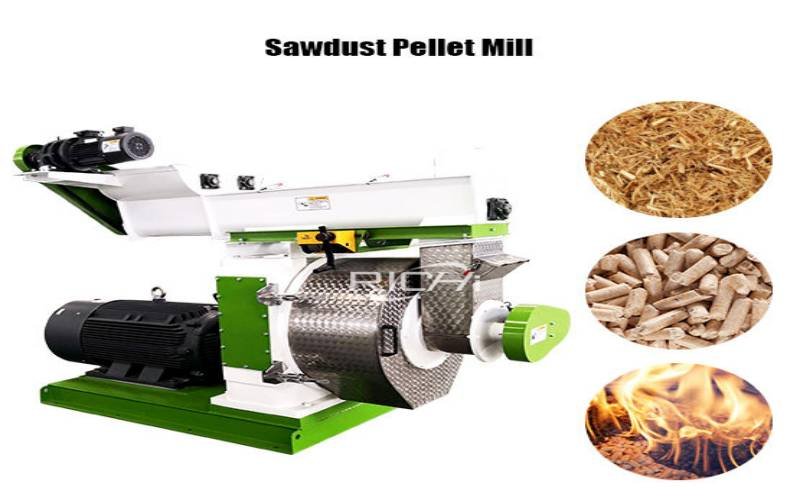
Finally, the material is pressed through a die. Rollers press the sawdust through holes in a metal die. The pressure and friction generate heat. The lignin melts. The particles bind together. The result is a dense, durable pellet. The whole process is powered by a pellet maker machine, and the quality of that machine determines the quality of the final product.
The change is dramatic. A ton of sawdust pellets takes up about one cubic meter of space. That is a fraction of the volume of loose sawdust. The pellets flow like grain. They can be stored in bins or silos. They can be transported in bulk trucks. They can be fed into automatic boilers and stoves. They burn cleanly and efficiently, with far less smoke than loose sawdust.
Choosing the Right Machine
If you are processing sawdust for your own use, a small pellet machine may be sufficient. These machines are affordable, compact, and can be run intermittently. They are a good starting point for a workshop that wants to test the market before committing to a larger system.
But if you are processing sawdust at a commercial scale, you need equipment that is built for continuous operation. A large scale biomass pellet machine is designed for this purpose. These machines have larger dies, more powerful motors, and heavier construction. They can process several tons per hour, day after day. They include advanced control systems that monitor temperature, pressure, and feed rate. They are built to last.
The die is the most important component. Sawdust is abrasive, so the die must be made from wear-resistant alloy. The compression ratio must be matched to the material. The feeding system must handle fluffy, variable material without wrapping or bridging. The drive system must provide enough torque to compress the wood fiber without stalling. The cooling and screening systems must be sized for the throughput.
The Complete Line
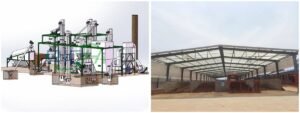
A pellet machine on its own does not make a production line. It is one component of a system that includes grinding, drying, conditioning, pelleting, cooling, and screening. A complete pellet production line integrates all of these stages into a coordinated flow. Each stage affects the quality of the final product. If any stage is undersized or poorly matched, the whole line suffers.
Grinding is the first step. A hammer mill reduces the sawdust to a consistent particle size. If the grind is too coarse, the pellets will be weak. If it is too fine, the pellets may be too dense and less combustible.
Drying is often necessary. Sawdust that has been stored outside may have a moisture content of 15% to 20%. For pelleting, the moisture should be around 10% to 12%. A rotary dryer or a belt dryer can reduce the moisture to the right level. Drying is the most energy-intensive step in the line, so the efficiency of the dryer has a big impact on operating costs.
Conditioning is where steam is added. The temperature and moisture must be controlled precisely. Too little conditioning produces weak pellets. Too much makes the material sticky and difficult to press.
Cooling follows pelleting. Fresh pellets are hot and soft. They must be cooled to harden and to reduce moisture to a stable level. A counterflow cooler is the most common choice.
Screening removes fines and broken pellets. The fines are recycled back into the process. Screening ensures that the finished product meets the size and quality specifications expected by the market.
What Sawdust Pellets Are Used For
Sawdust pellets have several markets. The largest is fuel. Wood pellets can be burned in pellet stoves, boilers, and industrial furnaces. They provide heat for homes, greenhouses, and commercial buildings. They can also be used in combined heat and power systems. In Europe, where biomass heating is well established, wood pellets are a major commodity. In North America, the residential heating market is strong, and export demand is growing.
Sawdust pellets also have applications beyond fuel. They can be used as animal bedding. The absorbent nature of wood makes it suitable for horse stalls, poultry houses, and small animal bedding. Pelleted bedding is easier to handle and store than loose sawdust, and it produces less dust.
There is also a market for wood pellets as a soil amendment or a component in compost. And in some regions, wood pellets are used as a feedstock for gasification or torrefaction to produce advanced biofuels.
The Economics
The economics of sawdust pelleting depend on several factors. The cost of the raw material is usually low—sawdust is a byproduct that many operations pay to dispose of. The cost of energy is significant, especially for drying. The cost of labor depends on the level of automation. The cost of maintenance depends on the abrasiveness of the material and the quality of the equipment.
On the revenue side, sawdust pellets can be sold as fuel, as bedding, or as a soil amendment. The fuel market is the largest. Wood pellets typically sell for $150 to $300 per ton, depending on the quality and the market. Premium pellets for residential stoves command higher prices. Industrial pellets for power plants are more of a commodity.
For many operations, the payback period is two to four years. After that, the system generates ongoing savings or income. The environmental benefits—reduced open burning, lower fossil fuel use, better waste management—are an additional advantage.
What to Look For in a Supplier
Before you buy, ask the supplier these questions. What is the actual capacity with my material? What die configuration do you recommend and why? What is the expected die life? What spare parts should I keep on hand? What training do you provide? What support do you offer after the sale?
The answers will tell you a lot about the supplier and the equipment. A supplier who hesitates or gives vague answers is not the one you want to work with. A supplier who engages with your questions and provides specific, detailed answers is the one you want.
It also helps to visit a working installation. See the equipment in operation. Talk to the operators. Watch how the pellets come out. Ask about maintenance and downtime. A firsthand look will tell you more than any brochure. If you cannot visit, ask for references from other customers and call them. Their experience will tell you more than any sales pitch.
The Bottom Line
The sawdust pile is not a problem. It is an opportunity. The technology to turn it into clean-burning pellets is available, affordable, and proven. Whether you are a sawmill, a furniture shop, or a woodworking operation, you have the raw material. You have the market. You have the opportunity. The only thing missing is the pellet maker machine that turns one into the other. If you are ready to stop paying to dispose of your sawdust and start earning from it, the time to act is now. The pile is waiting.
Read more:https://pelletizerextruder.com/sawdust-pellet-machine/