Cow dung is one of the most abundant organic residues generated by cattle farms, dairy farms, livestock operations, and animal husbandry facilities. When cattle are raised on a large scale, the amount of manure generated every day can be substantial. Managing this manure properly is therefore an important part of farm operations.
Traditionally, cow dung may be stored, composted, spread directly onto agricultural land, or used in other agricultural applications. However, fresh manure usually contains considerable moisture and has a loose, irregular structure, making it difficult to store, transport, and handle efficiently.
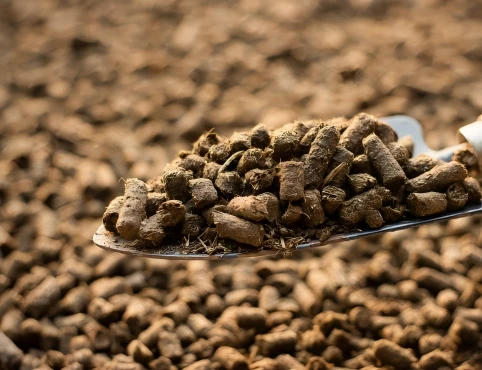
Cow dung pelletizing provides another approach. By processing prepared cow dung through a series of drying, crushing, mixing, pelletizing, cooling, and screening processes, manure can be converted into compact pellets with more uniform physical characteristics.
Depending on the formulation and processing conditions, cow dung pellets can be used as organic fertilizer pellets or, in some applications, as biomass fuel pellets. The appropriate application depends on the raw material, processing method, local regulations, and final product requirements.
A properly designed cow dung pellet making machine can serve as the core equipment for this process, but successful production requires more than just a pellet mill. Raw material preparation, moisture control, particle size, pelletizing pressure, cooling, screening, and storage all influence the final product.
This article explains how cow dung pelletizing works, why manure is pelletized, what equipment is needed, and how cow dung can be transformed from a difficult-to-handle waste stream into a useful pellet product.
What Is Cow Dung Pelletizing?
Cow dung pelletizing is the process of converting processed cattle manure into compact cylindrical pellets.
The process normally involves several stages:
Cow Dung Collection → Cleaning → Composting or Fermentation → Drying → Crushing → Mixing → Pelletizing → Cooling → Screening → Packaging
The exact process depends on the intended application.
For organic fertilizer pellets, the manure may be composted or fermented before pelletizing. Other organic materials may be added to adjust nutrient content, moisture, and physical properties.
For fuel applications, the material must meet appropriate fuel and safety requirements, and the composition and processing conditions should be evaluated carefully.
The central idea is to transform a wet, bulky, and irregular material into a standardized pellet that is easier to handle.
Why Is Cow Dung Difficult to Handle in Its Original Form?
Fresh cow dung has several characteristics that create challenges for large-scale handling.
High Moisture Content
Fresh manure usually contains substantial moisture. Wet material is heavy and can be expensive to transport.
Low Bulk Density
Loose manure takes up a considerable amount of space.
Irregular Structure
Cow dung does not naturally have a standardized shape or particle size.
Difficult Storage
Improperly stored manure can create odor, leachate, and hygiene management challenges.
Uneven Nutrient Distribution
When manure is collected and stored in different conditions, nutrient content can vary.
Pelletizing does not eliminate the need for proper manure management, but it can provide a more standardized physical form for certain applications.
How Cow Dung Pelletizing Turns Waste Into Useful Pellets
The main advantage of pelletizing is that it changes the physical form of manure.
Instead of handling loose cow dung, the operator produces compact pellets.
This can improve:
- Storage efficiency
- Transportation
- Handling
- Dosing
- Packaging
- Application
- Product consistency
For fertilizer applications, pelletized manure can be easier to package, transport, and apply than loose manure.
For biomass fuel applications, properly processed organic material can potentially be formed into fuel pellets when the material composition and regulatory requirements are suitable.
Cow Dung as an Organic Fertilizer Feedstock
Cow dung naturally contains organic matter and plant nutrients.
When appropriately processed, it can be used as a component of organic fertilizer products.
Cow dung fertilizer pellets can be designed for applications such as:
- Agricultural fields
- Vegetable production
- Fruit orchards
- Pasture
- Landscaping
- Horticultural applications
- Soil improvement
Pelletizing does not automatically increase the nutrient content of manure. Instead, it changes the physical form and can make the material easier to handle and distribute.
The nutrient composition depends on factors such as cattle diet, bedding materials, manure collection methods, storage, composting, and additional ingredients.
Can Cow Dung Be Used to Make Fuel Pellets?
Cow dung and other animal manure can contain organic matter that may have energy value. However, producing fuel pellets from manure requires careful evaluation.
The material should be analyzed for:
- Moisture
- Ash content
- Organic matter
- Calorific value
- Contaminants
- Chlorine and other relevant elements
- Combustion characteristics
Manure-derived fuel can have relatively high ash content compared with conventional woody biomass. Therefore, fuel applications should be evaluated according to the specifications of the intended combustion system.
For some projects, cow dung may be combined with other biomass materials to create a more suitable fuel mixture.
The final formulation should be developed according to actual testing rather than assuming that all cow dung has the same fuel characteristics.
Step 1 Collect and Prepare Cow Dung
The first step is collecting manure from cattle farms or livestock facilities.
Depending on the farm system, cow dung may be collected manually, mechanically, or through scraping and manure handling systems.
The collected material may contain:
- Cow dung
- Bedding
- Straw
- Feed residues
- Soil
- Stones
- Other foreign materials
Before pelletizing, unwanted materials should be removed where necessary.
Large stones and metal pieces can damage crushers and pellet mills.
Step 2 Composting or Fermentation
For organic fertilizer production, composting or fermentation may be an important pretreatment step.
Composting helps stabilize organic material and can reduce the problems associated with processing fresh manure.
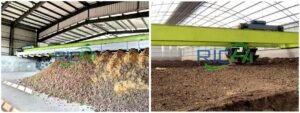
The composting process may involve:
- Moisture control
- Aeration
- Turning
- Temperature management
- Organic matter decomposition
A compost turner can be used in larger fertilizer production projects.
The objective is to obtain a relatively stable material that can be dried and processed into fertilizer pellets.
Step 3 Dry the Cow Dung
Moisture control is one of the most important steps in cow dung pellet production.
Fresh manure may contain too much water for efficient pelletizing.
Drying reduces excess moisture and prepares the material for crushing and compression.
A rotary dryer or other suitable industrial drying system may be used depending on project capacity.
The dryer should be selected based on:
- Initial moisture
- Target moisture
- Processing capacity
- Available heat source
- Material characteristics
Over-drying should also be avoided because excessive drying can increase energy consumption and affect pellet formation.
Step 4 Crush the Dried Material
After drying, cow dung may contain hard lumps and irregular particles.
A crusher or vertical grinder can reduce these lumps and create a more uniform feedstock.
Particle size consistency is important because the pellet mill works more effectively when the material is reasonably uniform.
Crushing can also improve mixing when additional fertilizer ingredients or biomass materials are added.
Step 5 Mix Cow Dung With Other Materials
Depending on the final product, cow dung may be pelletized alone or combined with other ingredients.
For fertilizer production, additional materials may include:
- Crop residues
- Compost
- Mineral ingredients
- Organic additives
- Other livestock manure
- Nutrient-rich organic materials
Mixing allows the producer to adjust the physical and nutritional characteristics of the final product.
A horizontal or vertical mixer can be used depending on the production line design.
The mixing system should provide relatively uniform distribution of all ingredients.
Step 6 Control Moisture Before Pelletizing
Before the material enters the pellet mill, moisture should be checked again.
Moisture affects compression and pellet formation.
If the material is too wet:
- Pellets may become soft.
- Die holes may become blocked.
- Feeding can become unstable.
- Production efficiency may decrease.
If the material is too dry:
- Pellet formation may become difficult.
- Fines may increase.
- Pellet durability may decline.
The appropriate moisture condition depends on the material composition and pellet mill configuration.
Step 7 Use a Cow Dung Pellet Making Machine
The pellet machine is the core component of the production process.
A cow dung pellet making machine compresses prepared manure through die holes to form cylindrical pellets.
The basic process is:
- Prepared material enters the feeding system.
- Material moves into the compression chamber.
- Rollers press the material against the die.
- Material is forced through die holes.
- Continuous strands are formed.
- A cutting mechanism produces pellets of the required length.
Ring die pellet mills can be used for larger commercial production lines, while other pelletizing systems may be selected depending on capacity and product requirements.
The machine should be selected according to the raw material and intended pellet application.
(Learn more: https://richipelletizer.com/cow-dung-pellet-making-machine/)
How the Pellet Die Affects Cow Dung Pellets
The die is one of the most important components of a pellet mill.
The diameter of the die holes determines the basic pellet diameter.
Common pellet sizes may vary depending on the final application.
For fertilizer pellets, relatively larger diameters may be selected for easier handling and spreading. Smaller pellets may be required for certain applications.
The die compression ratio also affects pellet formation.
An unsuitable compression ratio can cause:
- Low production
- High energy consumption
- Poor pellet durability
- Die blockage
- Excessive fines
Therefore, die selection should be based on actual material testing.
How Rollers Affect Pellet Production
Rollers apply pressure to the material as it passes through the die.
The condition of the rollers directly affects production performance.
Worn rollers may result in:
- Uneven compression
- Reduced output
- Increased energy consumption
- Poor pellet formation
Regular inspection is therefore important.
The clearance between rollers and die should also be adjusted correctly according to the pellet mill design.
Proper maintenance can extend the service life of important wear components.
Step 8 Cool the Finished Pellets
Fresh pellets can be warm after leaving the pellet mill.
Cooling is important before screening and packaging.
A pellet cooler can:
- Reduce pellet temperature
- Remove residual moisture
- Improve pellet stability
- Reduce condensation risk
- Prepare pellets for storage
Cooling is particularly important when pellets will be packaged immediately after production.
Step 9 Screen the Pellets
After cooling, the pellets can pass through an industrial vibrating screening equipment.
Screening separates:
- Finished pellets
- Fine powder
- Broken pellets
- Oversized particles
Fine material may be recycled into the pelletizing process depending on the formulation and production design.
Effective screening improves the consistency of the final product.
Step 10 Package the Cow Dung Pellets
The final stage is packaging.
Depending on the target market, cow dung pellets can be packed into:
- Small bags
- Large bags
- Woven bags
- Bulk containers
Automatic weighing and packing machines can improve packaging accuracy and reduce labor requirements.
For commercial fertilizer products, packaging can also provide information about:
- Product weight
- Nutrient content
- Recommended application
- Production date
- Storage conditions
Labeling requirements depend on local regulations.
Advantages of Cow Dung Fertilizer Pellets
Pelletized manure can provide several practical advantages compared with loose manure.
Easier Transportation
Pellets have a standardized shape and are generally easier to load and transport.
Better Storage Efficiency
The compact form allows more organized storage.
Easier Application
Pellets can be distributed using suitable fertilizer spreading equipment.
More Consistent Product Form
Pelletizing creates a more uniform physical product.
Commercial Packaging
Pellets are easier to package into standardized commercial units.
Reduced Handling Difficulty
Workers do not need to handle loose manure directly throughout every stage of distribution.
These benefits make pelletizing attractive for farms and fertilizer manufacturers that want to develop standardized organic fertilizer products.
How Cow Dung Pelletizing Supports Waste Management
The purpose of pelletizing is not simply to produce pellets.
It can also form part of a broader manure management strategy.
A livestock farm may generate large quantities of manure every day. If the manure is not properly managed, storage and transportation can become increasingly difficult as herd size grows.
Pellet production provides a pathway for converting part of this material into a marketable or usable product.
The process can be viewed as:
Cattle Farming → Manure Collection → Organic Processing → Drying → Pelletizing → Fertilizer Product
This creates a more structured utilization pathway for livestock manure.
Factors Affecting Cow Dung Pellet Quality
Pellet quality depends on multiple factors.
Moisture
The material needs an appropriate moisture level for stable compression.
Particle Size
Large lumps can reduce compression consistency.
Organic Composition
The composition of manure affects its binding characteristics.
Additional Ingredients
Added biomass or fertilizer materials can change pellet formation.
Die Compression
The die should match the material and required pellet diameter.
Roller Condition
Worn rollers can reduce production stability.
Cooling
Insufficient cooling can affect storage stability.
Screening
Poor screening can increase fines in the final product.
Quality should therefore be controlled from raw material preparation through packaging.
Common Problems in Cow Dung Pellet Production
Pellets Are Too Soft
This may be caused by excessive moisture, unsuitable compression, or insufficient preparation.
Pellets Break Easily
Possible causes include low moisture, unsuitable particle size, weak compression, or inadequate cooling.
Die Blockage
Excessively wet material or unsuitable formulation may cause material accumulation in die holes.
Uneven Pellet Size
This can result from unstable feeding or incorrect cutting conditions.
Excessive Fine Powder
Poor compression, unsuitable moisture, or insufficient screening can increase fines.
Low Production Capacity
The problem may originate from the pellet mill itself or from upstream drying, crushing, mixing, and feeding equipment.
This demonstrates why a complete production line should be considered rather than focusing only on the pellet mill.
Cow Dung Pelletizing Equipment
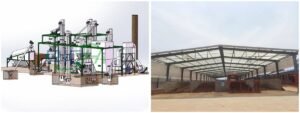
A complete cow dung pellet production line may include:
- Manure collection system – collects and transports raw cow dung.
- Compost turner – supports fermentation and composting when required.
- Dryer – reduces excess moisture.
- Crusher – breaks dried manure into smaller particles.
- Mixer – combines cow dung with other ingredients.
- Cow dung pellet making machine – forms the material into pellets.
- Cooler – reduces pellet temperature.
- Vibrating screen – separates fines and unqualified pellets.
- Coating machine – applies additional materials when required.
- Packing machine – weighs and packages the finished pellets.
Conveyors and dust collection systems can be integrated throughout the production line.
How to Choose a Cow Dung Pellet Making Machine
Choosing the correct machine starts with understanding the raw material.
Important information includes:
- Cow dung moisture
- Daily manure availability
- Required production capacity
- Desired pellet diameter
- Final application
- Additional ingredients
- Available power supply
- Factory layout
- Required automation level
A machine designed for one type of organic material may not necessarily perform identically with another material.
Therefore, raw material testing and process evaluation are useful before final equipment selection. (find out this here)
Cow Dung Pellet Production Capacity
Production capacity should be selected according to the actual manure supply.
For example, a small livestock farm may require a compact pellet production system, while a large dairy operation or commercial fertilizer factory may require a continuous high-capacity line.
The capacity of the pellet machine should also be matched with:
- Dryer capacity
- Crusher capacity
- Mixer capacity
- Cooler capacity
- Screening capacity
- Packing capacity
If one machine is significantly smaller than the others, it can become a bottleneck.
A balanced production line is therefore important for achieving stable output.
How Automation Improves Cow Dung Pellet Production
Automation can be introduced at different levels.
A basic system may rely on manual feeding and control.
A more advanced system can automatically control:
- Feeding rate
- Dryer operation
- Mixing time
- Pellet mill load
- Cooling airflow
- Screening
- Packing
- Equipment alarms
Automation can help improve production consistency and reduce manual intervention.
For large commercial plants, centralized control can integrate multiple processing stages into one operating system.
Why a Complete Turnkey Solution Can Be Useful
Cow dung pellet production involves several interconnected processes.
Buying a pellet mill without considering drying, crushing, mixing, cooling, and screening can lead to capacity mismatches.
A complete turnkey solution can coordinate:
Raw Material Handling → Composting → Drying → Crushing → Mixing → Pelletizing → Cooling → Screening → Packaging
The equipment configuration can be customized according to the farm’s raw material characteristics, production target, and final product.
This approach can help reduce process bottlenecks and simplify project implementation.
(over at this website: RICHI Pelletizer)
Cow Dung Pelletizing for Organic Fertilizer Production
One of the most practical applications of cow dung pelletizing is organic fertilizer production.
The manure can be processed into pellets that are easier to transport and apply.
A commercial fertilizer line may also combine cow dung with other organic materials to produce a customized formulation.
For example, producers may adjust:
- Organic matter content
- Nutrient concentration
- Moisture
- Pellet diameter
- Pellet hardness
- Product packaging
The final formulation should be developed based on soil, crop, and market requirements.
Storage of Cow Dung Pellets
Proper storage is essential after pellet production.
Pellets should generally be kept:
- Dry
- Protected from rain
- Away from direct water contact
- In a well-managed warehouse
- On pallets or other suitable supports when appropriate
Moisture exposure can cause pellets to absorb water, soften, break, and lose their original shape.
Good packaging can also protect the product during transportation and storage.
Conclusion
Cow dung pelletizing provides a practical way to transform livestock manure from a difficult-to-handle waste material into a more standardized and useful pellet product.
The process normally includes manure collection, pretreatment, composting or fermentation where required, drying, crushing, mixing, pelletizing, cooling, screening, and packaging.
The cow dung pellet making machine is the central piece of equipment responsible for forming prepared manure into compact pellets. However, the performance of the complete production line depends on much more than the pellet machine itself. Moisture control, particle size, formulation, die selection, feeding stability, cooling, and screening all contribute to the final result.
For organic fertilizer production, cow dung pellets can offer advantages in storage, transportation, packaging, handling, and application. For fuel applications, the material should be carefully tested for moisture, ash, calorific value, contaminants, and combustion characteristics before developing a commercial fuel product.
With suitable raw material preparation and properly matched equipment, cow dung can be processed into a standardized pellet product that supports more efficient livestock waste management and creates additional value from agricultural residues.
For farms, livestock operations, and fertilizer manufacturers with a reliable supply of cow dung, pelletizing can therefore become an important part of a broader strategy for organic waste utilization and resource recovery.